Organization: The National Center for Disability Research and The Libyan Hearing Ambassadors
Title: School Hearing Screening
Al title (for format and translation – not permanent:
School hearing screening
Description:
In collaboration with the Ministry of Education, the National Center for Disability Research, and the Libyan Hearing Ambassadors jointly celebrated World Hearing Day 2026 by organizing a 5-day school hearing screening campaign targeting first graders. The campaign team visited 5 primary public schools in Benghazi, where more than 400 students were examined and screened for common ear diseases and hearing problems. Aiming for raising awareness of the importance of prevention, early detection, and timely treatment of hearing problems in school-age children, and to establish and integrate a hearing screening program for preschool and school-aged children into the primary healthcare system within school health programs.
Primary site: EMR – Libya
Region: EMR
Impactful Story:
When her parents initially refused consent for the school’s hearing screening, this first grader quietly insisted that she wanted “to check her ears just like her friends”. School staff and campaign team were waiting till the end of the school day when her father arrived to pick her up to check her hearing, the last but not least! Her simple honesty and determination made her parents change their minds and agreed to let her take part in the screening event, realizing that even young children can advocate meaningfully for their own well-being.
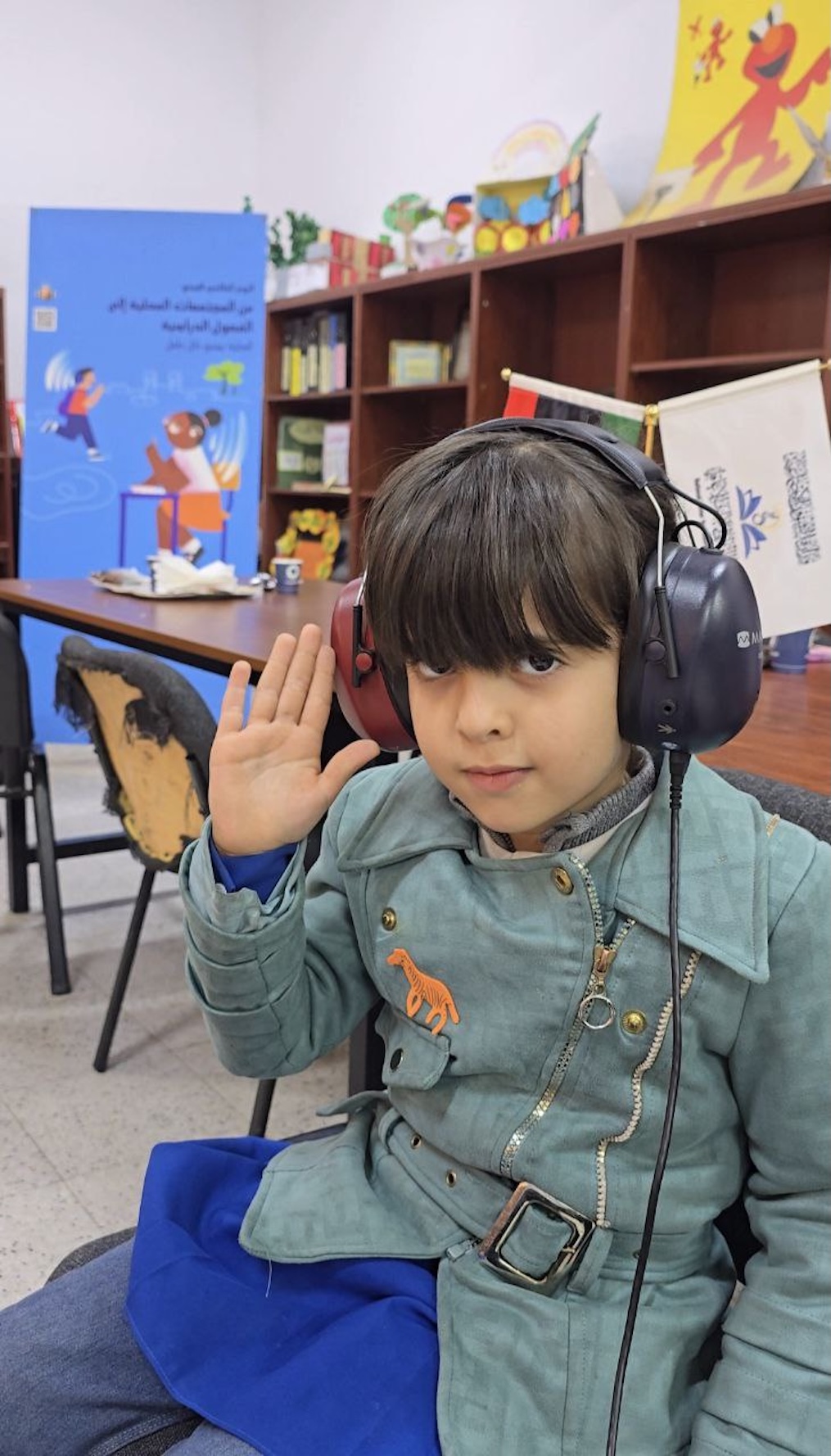
General Photos
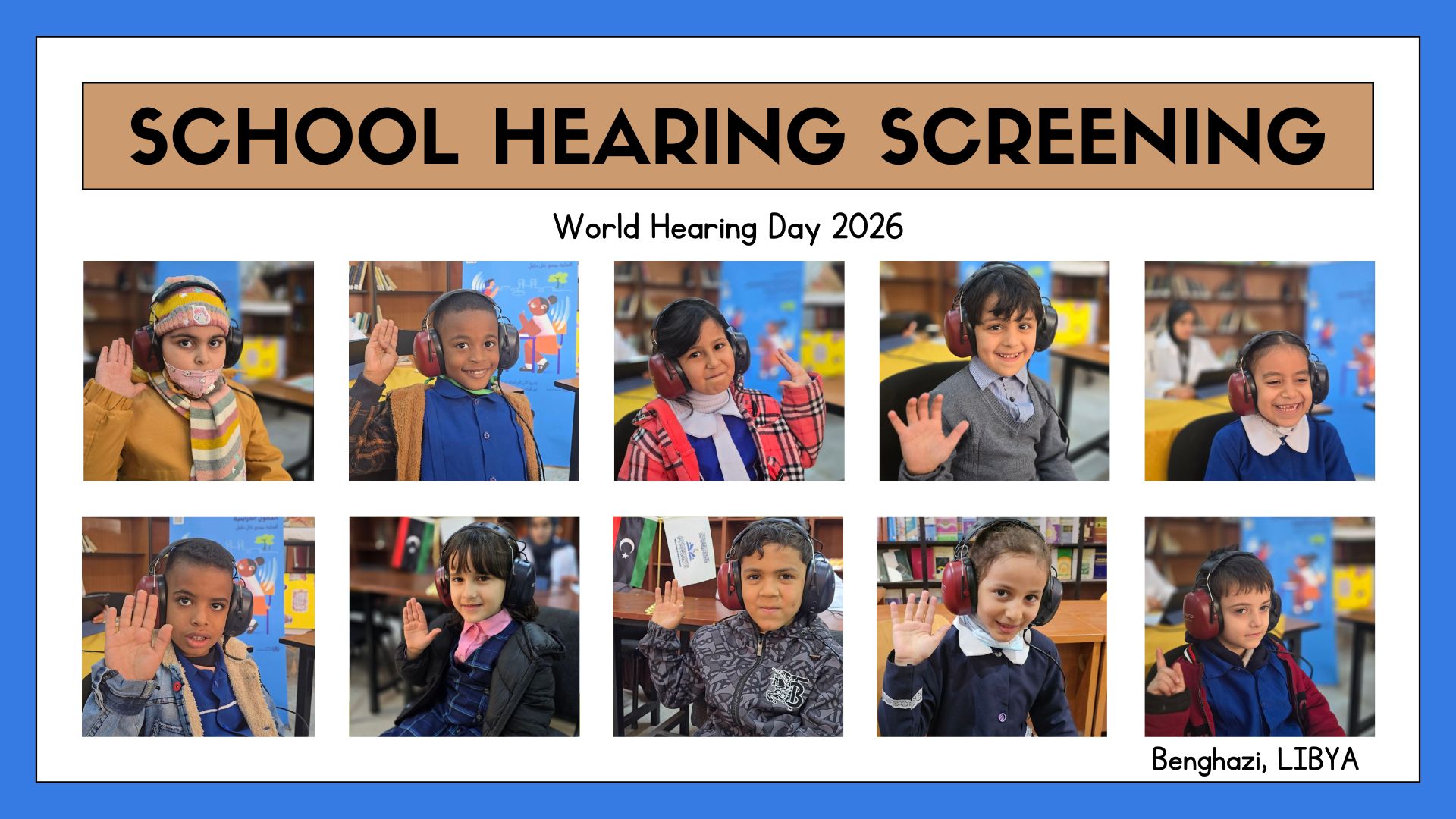
Healthy Ears, Happy Students
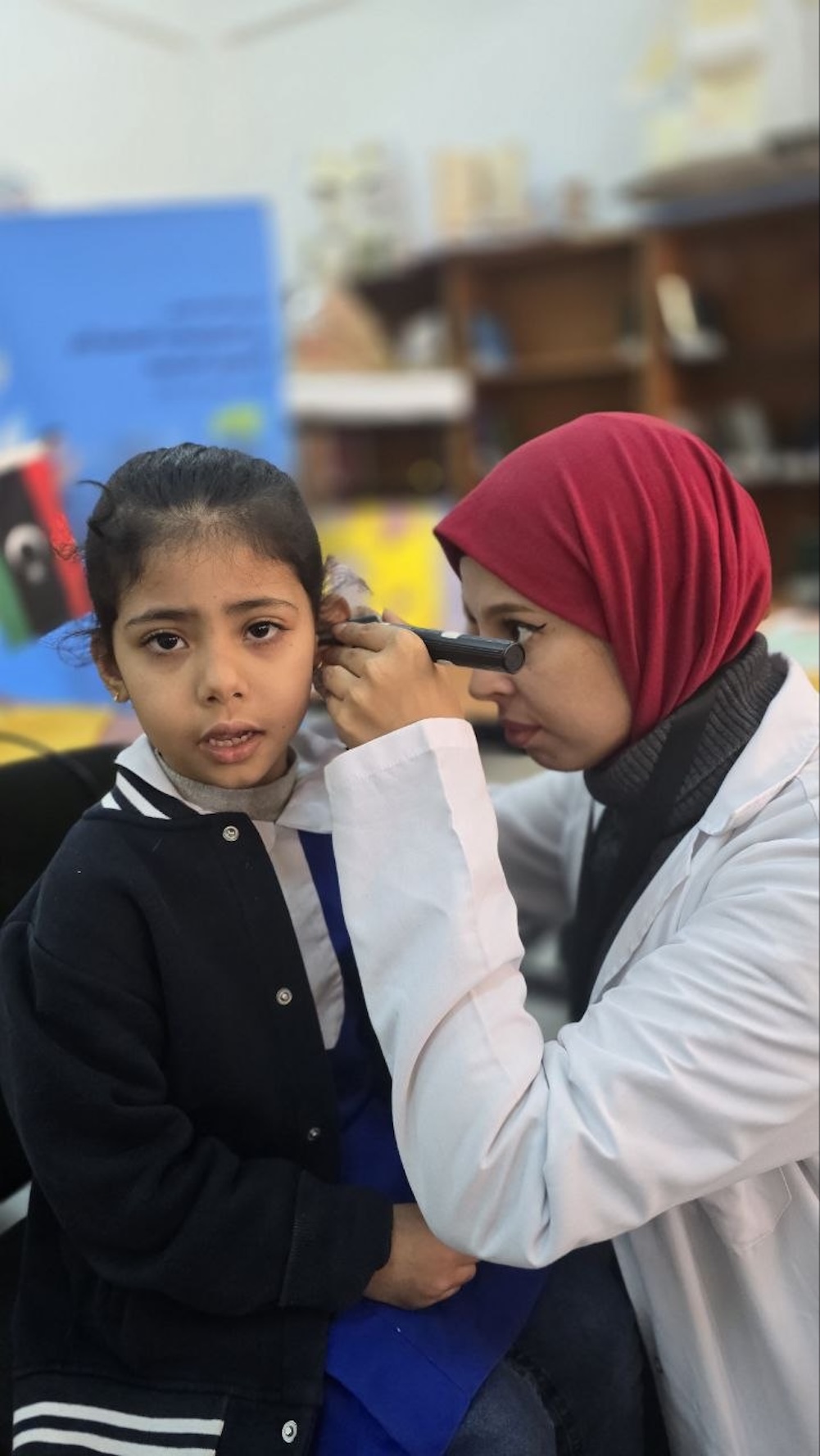
A volunteer performing an otoscopic ear exam
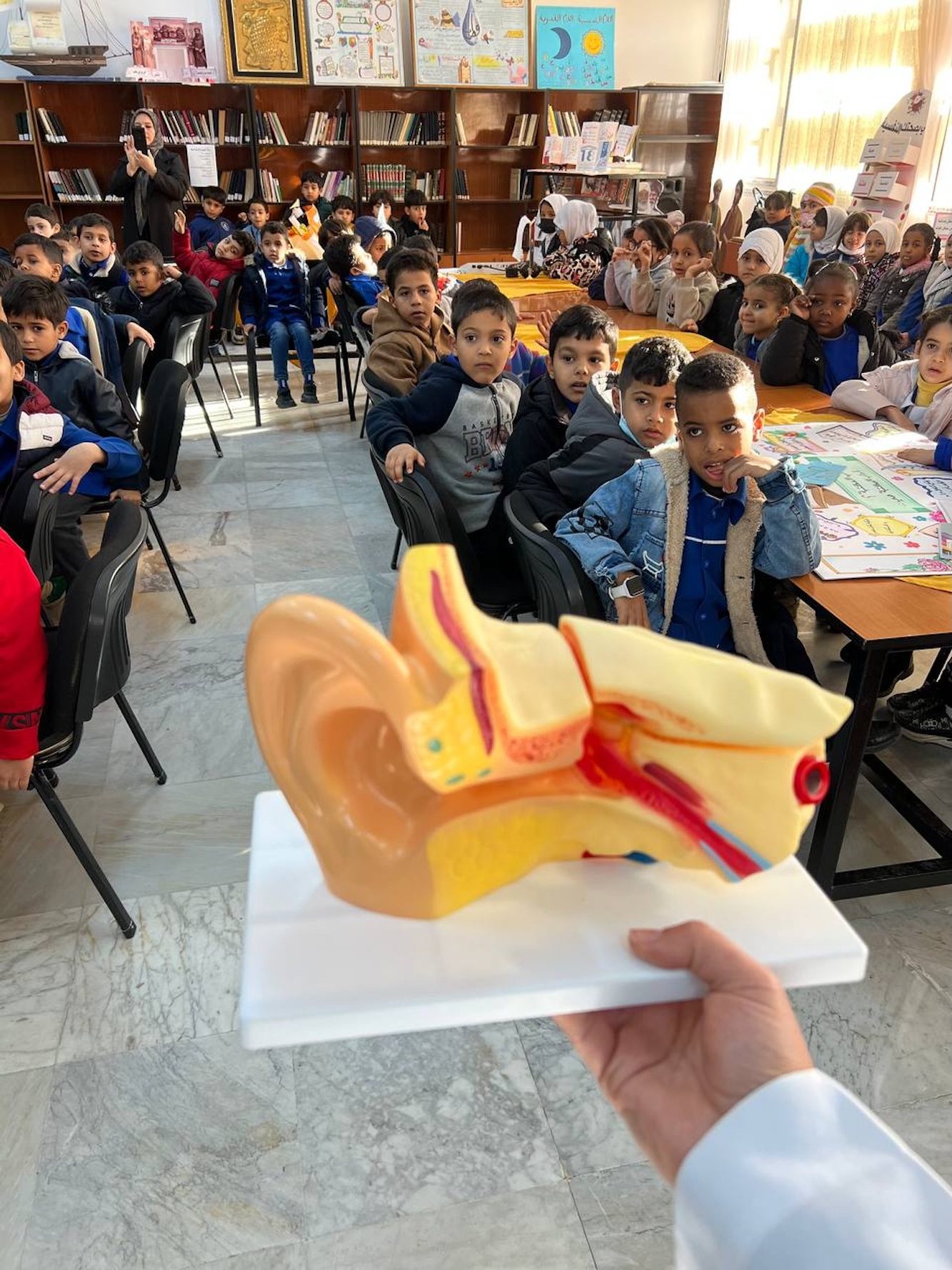
A volunteer giving an interactive “Ear Talk”
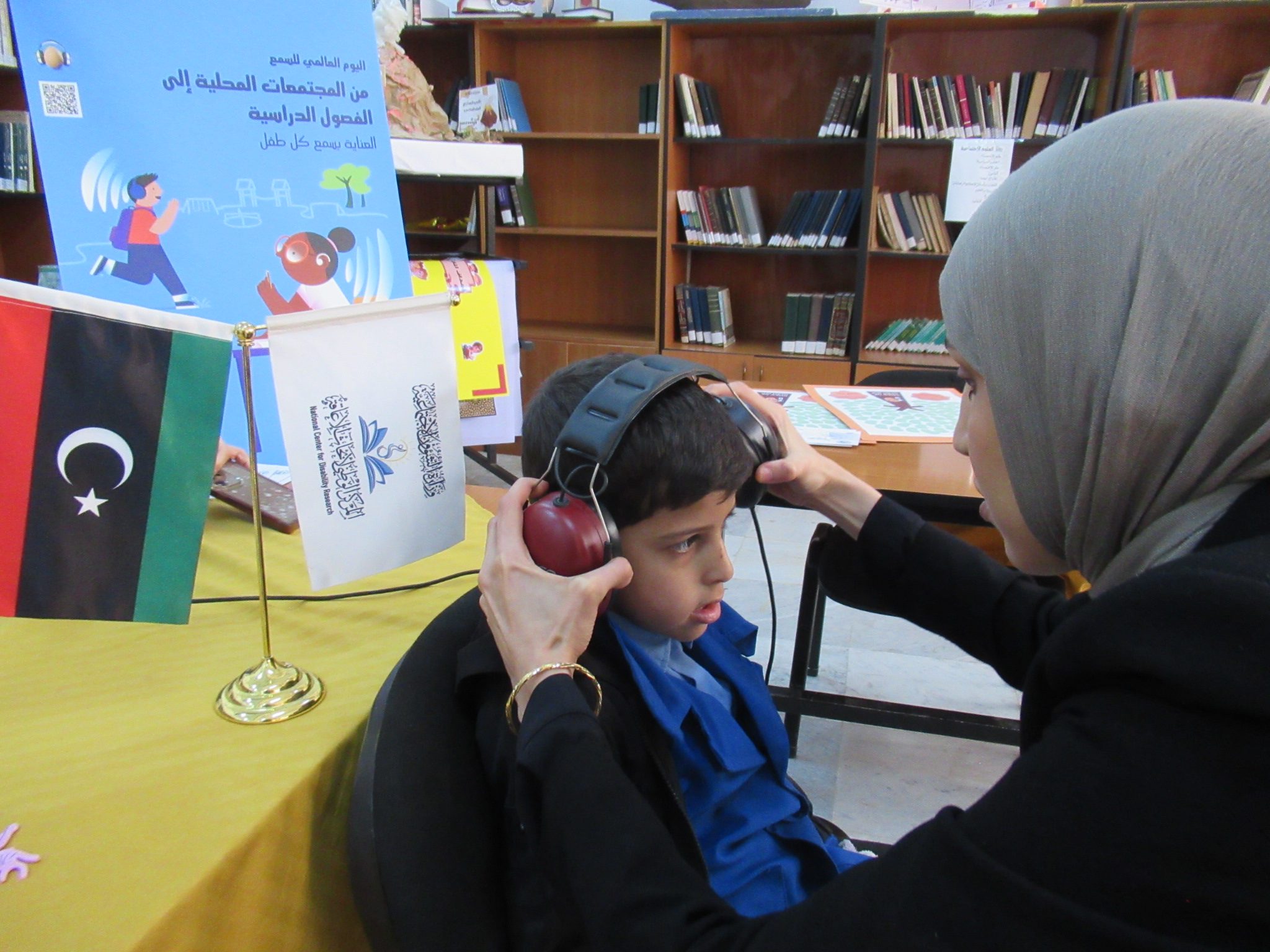
A volunteer placing the headphones on the student
Types of Engagement:
Live event: No
Screening: Yes
Traditional media: Yes
Social media: Yes
Special needs populations: children and adolescents
Met with individual policymaker: No
Participation of policy makers: Yes
Participation of influencers: No
WHO technical tool used: Yes
WHO educational and social media used: Yes