Organization: Centre For Disability in Development (CDD)
Title: Healthy Hearing for Every Child: From Home, Community, to School
Al title (for format and translation – not permanent:
Healthy hearing for every child: From home, community, to school
Description:
World Hearing Day 2026
Theme: “From Communities to Classrooms: Hearing Care for All Children”
Healthy Hearing for Every Child: From Home, Community, to School
To observe World Hearing Day 2026, the Centre for Disability in Development (CDD) will implement coordinated activities linking families, communities, and schools to promote early detection and inclusive hearing care for children.
Empowering Parents and Caregivers
To empower parents and caregivers, courtyard meetings and parent gatherings will be organized to raise awareness about early signs of hearing problems in children. The sessions will promote safe ear care, prevention of ear infections, and responsible use of headphones and mobile devices, along with guidance on when and where to seek medical support.
At School: Promoting Inclusive Classrooms
Interactive sessions will promote safe listening habits among students, while teachers will receive guidance on identifying hearing challenges and supporting inclusive classrooms. Child-focused hearing screening camps will support early identification and referral.
At Community Level: Building Awareness and Referral Support
Community meetings will engage local leaders, caregivers, and health workers to reduce stigma and promote positive attitudes toward children with hearing loss. Awareness rallies will help spread key messages widely and encourage community responsibility for children’s hearing health.
These efforts aim to ensure every child can hear, learn, and thrive.
Primary site: SEAR- Bangladesh
Region: SEAR
Impactful Story:
Tripti Mankhin, a young girl from an ethnic minority community in rural Mymensingh, was born with hearing and speech difficulties. Through early identification, she received a hearing aid and proper support, which improved her communication. Awareness sessions helped her family adopt better care practices. Despite being a girl with a disability and from a poor background, Tripti showed strong determination. With support from the project of CDD, she joined a group, gained skills, and built confidence. She also achieved success in a district-level football tournament, proving that with the right support, barriers can be overcome.
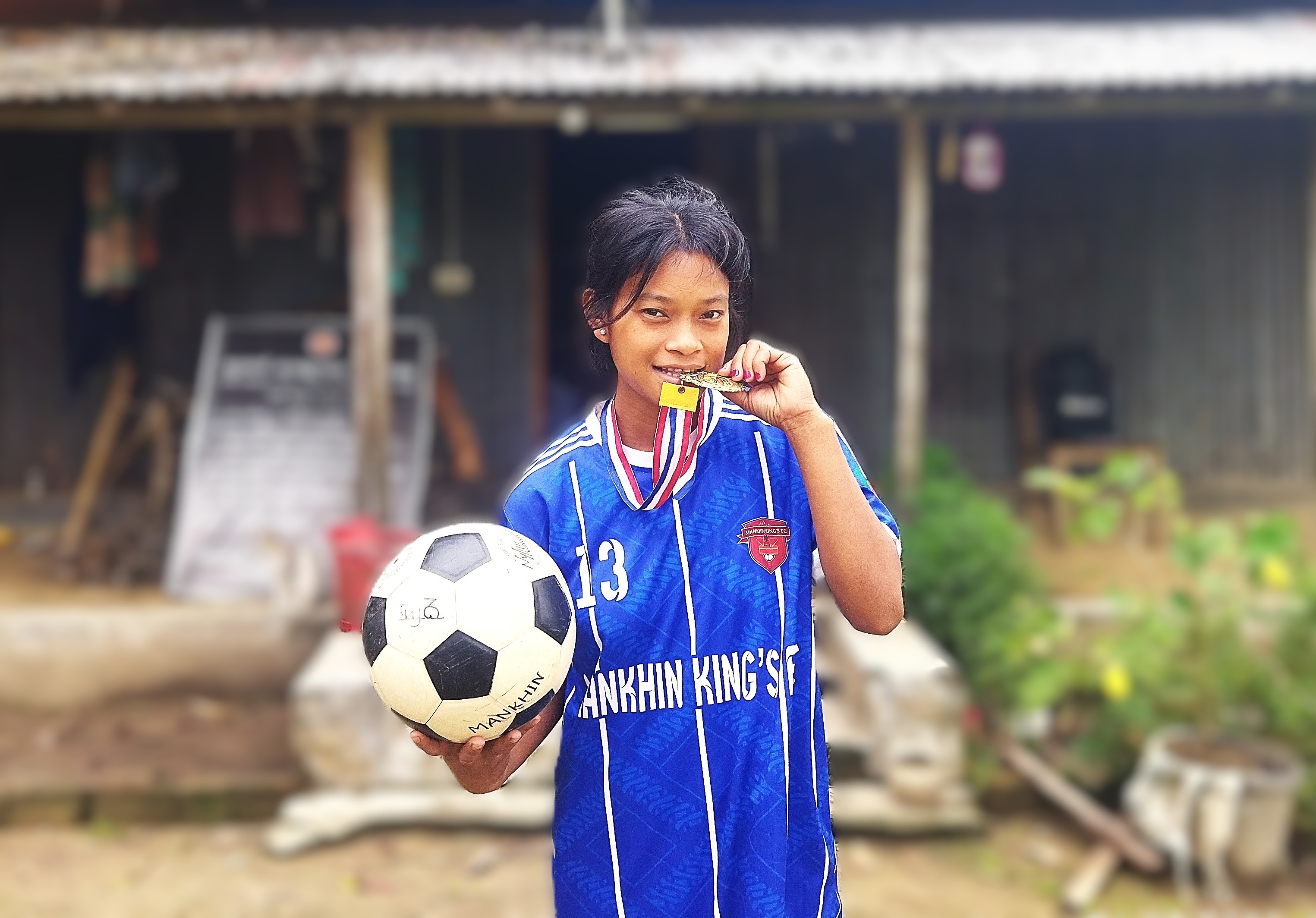
General Photos
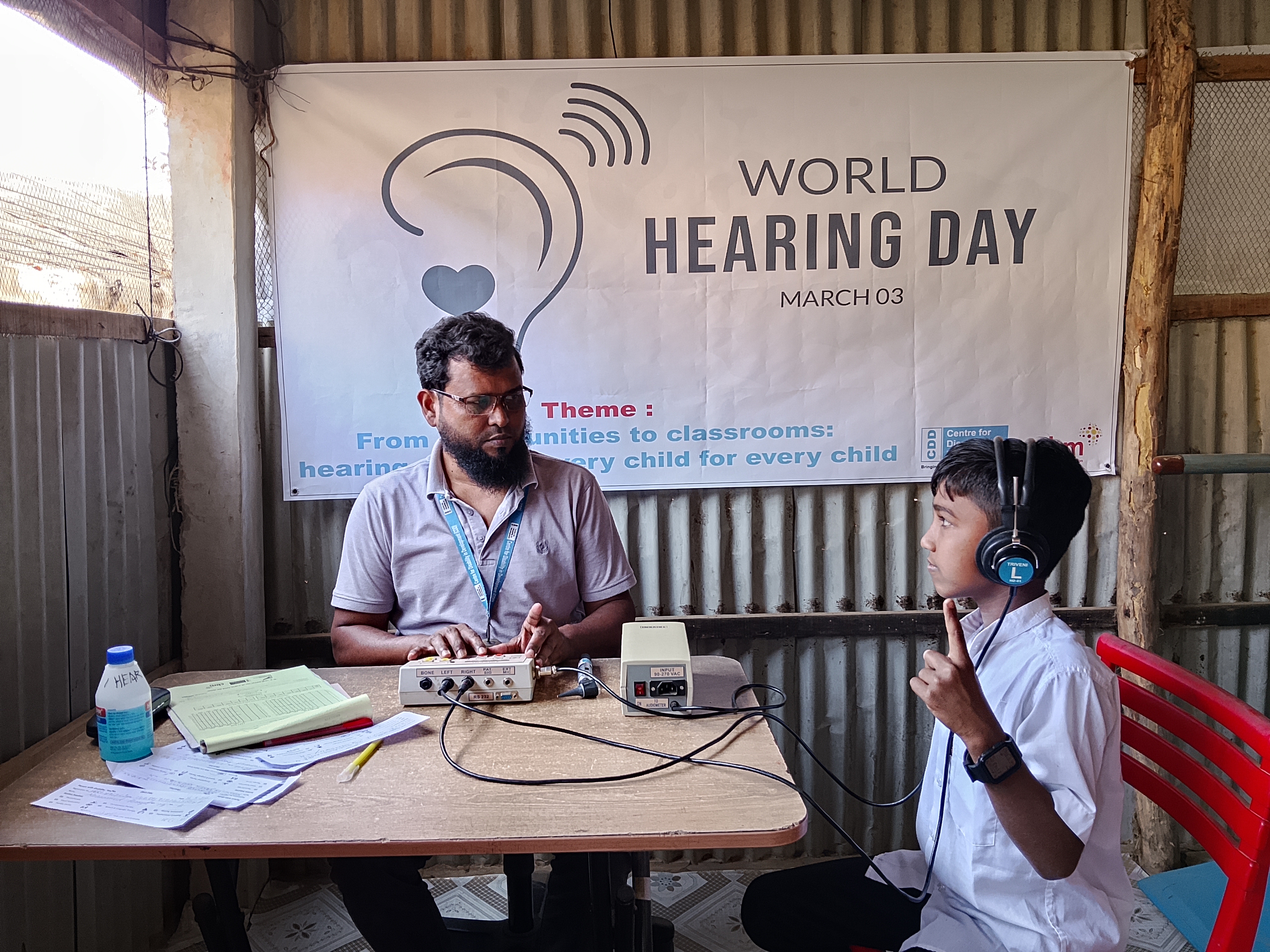
Hearing assessment conducts as part of World Hearing Day2026
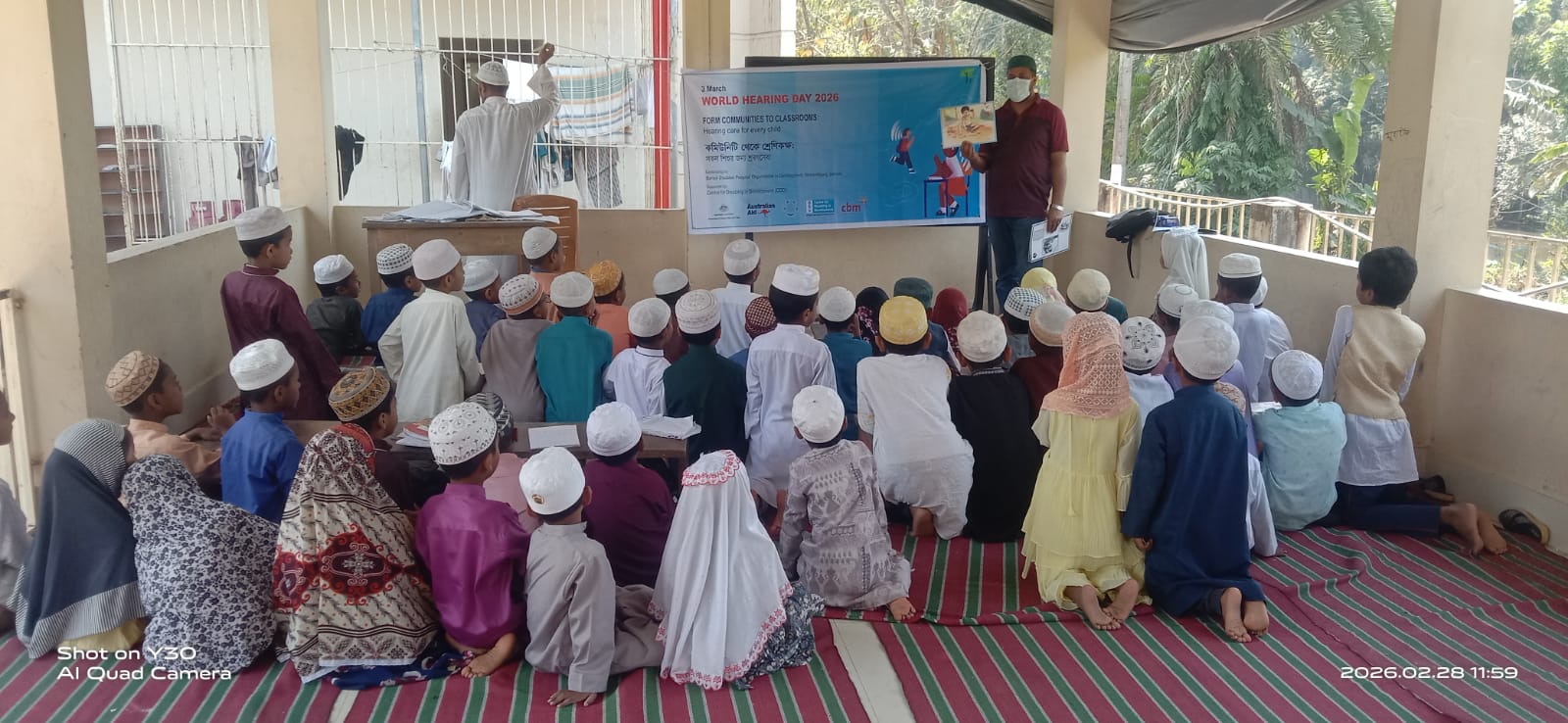
Community level Awareness at a local education center
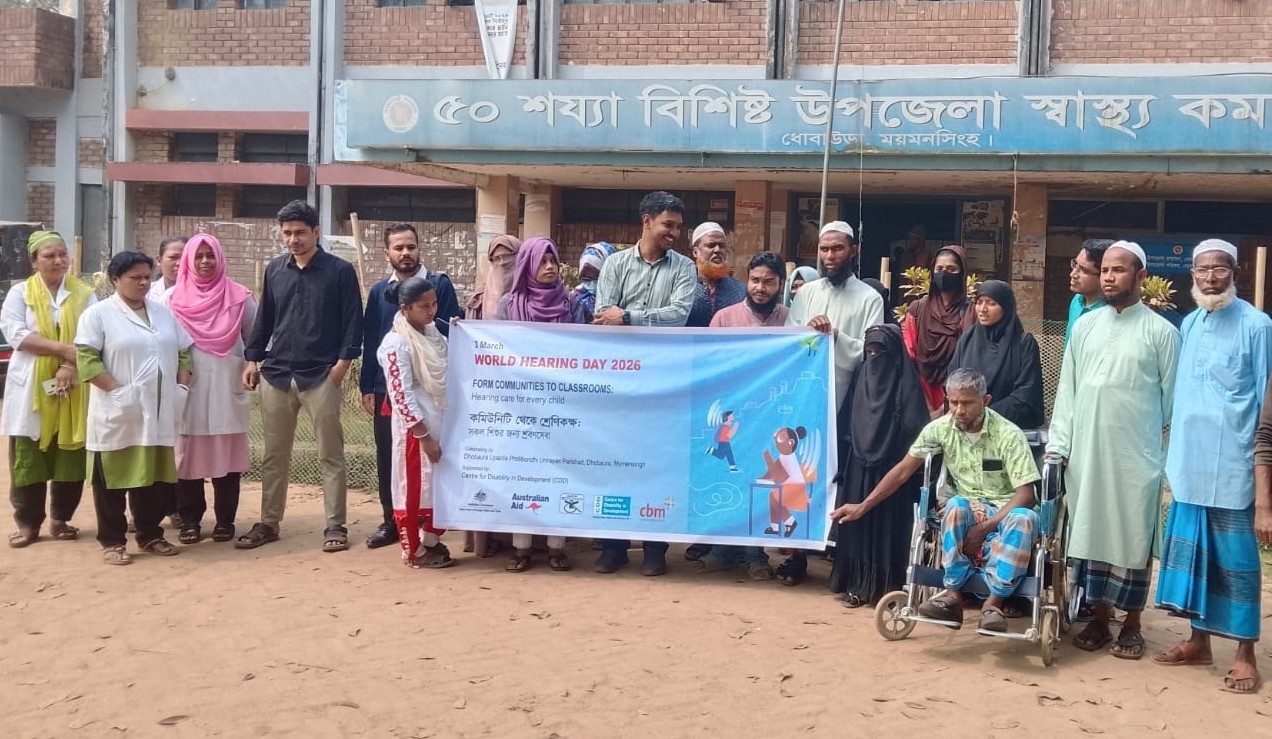
Stakeholders organized rally in front of a health centre
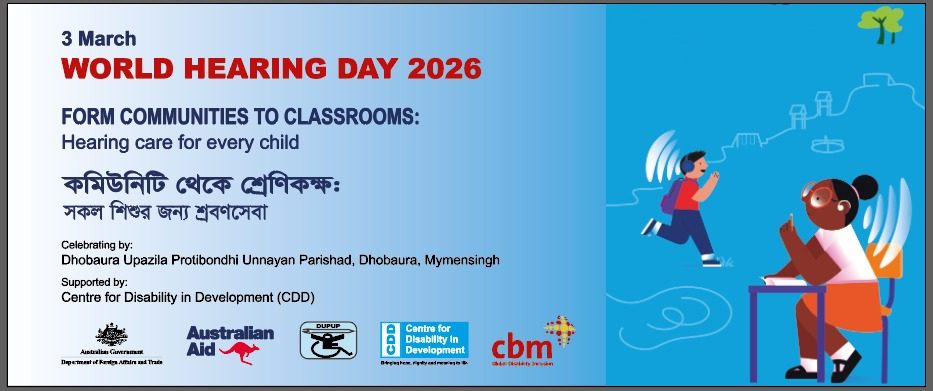
Banner used widely to celebrate World Hearing Day 2026
Types of Engagement:
Live event: Yes
Screening: Yes
Traditional media: No
Social media: Yes
Special needs populations: persons with disabilities (including hearing loss), children and adolescents, older adults, indigenous communities, rural or remote population
Met with individual policymaker: Yes
Participation of policy makers: Yes
Participation of influencers: No
WHO technical tool used: Yes
WHO educational and social media used: No