Organization: Division of Otology, Neurotology, audiology, and Balance, Department of Otorhinolaryngology, Siriraj Hospital
Title: ็Hear early, Learn Fully
Al title (for format and translation – not permanent:
Hear early, learn fully
Description:
In observance of World Hearing Day 2026, we will implement a coordinated set of initiatives to strengthen early identification, prevention, and referral of childhood hearing loss across healthcare and educational settings.
First, we will participate in the development of the 2026 universal newborn hearing screening guideline. The guideline will be officially launched online on 3 March 2026. This document will establish standardized care for newborn hearing screening and provide clear guidance on referral pathways and clinical management for medical personnel. By contributing to and adopting this guideline, we will support consistent practice, improve early detection at birth, and strengthen continuity of care from neonatal services to pediatric follow-up.
Second, we will organize a hospital-based campaign under the theme “Hear Early, Learn Fully.” This campaign will promote early childhood hearing screening and awareness among patients and their families. Free hearing screening services for children will be provided during the campaign period. Educational materials and counseling sessions will be offered to parents and caregivers, focusing on the importance of early detection, routine monitoring of developmental milestones, and timely medical consultation when concerns arise. The campaign will aim to create a supportive environment in which families understand that hearing care is essential for language development and learning success.
Third, we will produce a short educational video to support broader outreach. The video will focus on early detection of hearing loss in children and will clearly present signs and red flags that may indicate hearing difficulties. Specific guidance will be provided for teachers on how to recognize classroom indicators such as frequent requests for repetition, inattentiveness, or unclear speech. The video will also include practical advice for children and families on hearing self-care in the context of modern learning environments, particularly the safe use of multimedia devices and personal audio equipment. The video will be distributed online and shared through hospital and school communication channels to maximize accessibility.
Fourth, we will collaborate with selected schools to conduct hearing screening and educational activities for students, parents, and teachers. Primary school children may receive hearing screening to support early identification of undiagnosed hearing concerns. Educational sessions will be delivered to teachers to enhance their ability to recognize possible hearing problems and initiate appropriate referrals. Parents will receive information on warning signs, preventive care, and available referral pathways within the healthcare system. These school-based activities will strengthen the connection between community, classroom, and healthcare services.
Through these combined efforts—guideline development, hospital-based screening and education, digital learning resources, and school outreach—we will promote routine hearing screening, reinforce early identification and referral systems, and empower medical professionals, teachers, parents, and children with practical knowledge. This integrated approach will support sustainable improvements in childhood hearing care and contribute to better learning outcomes for children.
Primary site: SEAR- Thailand
Region: SEAR
General Photos
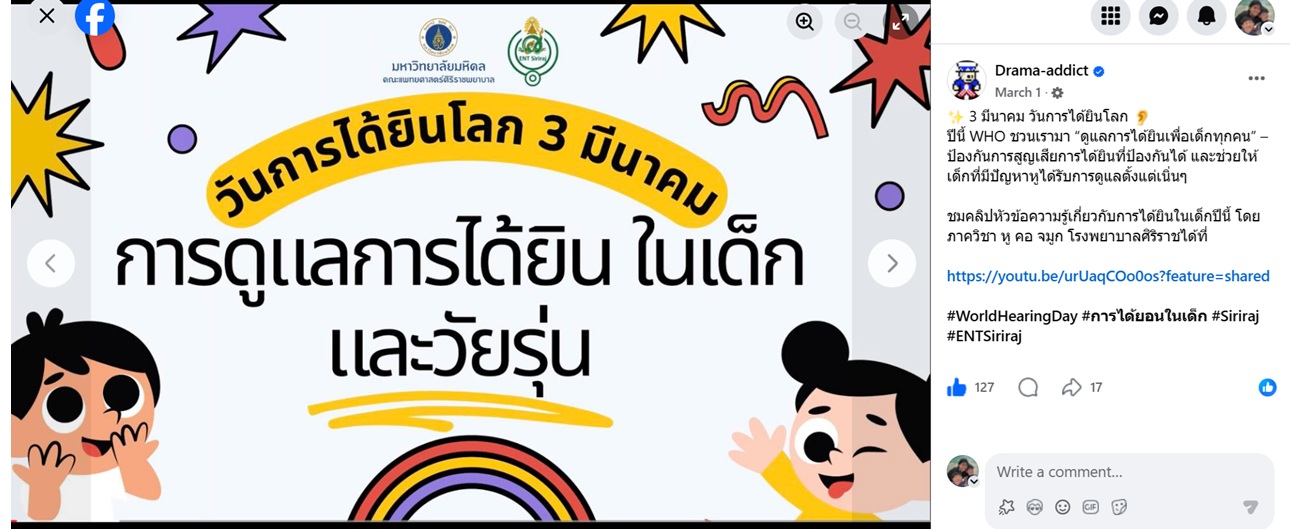
Social media campaign for enhance public awareness
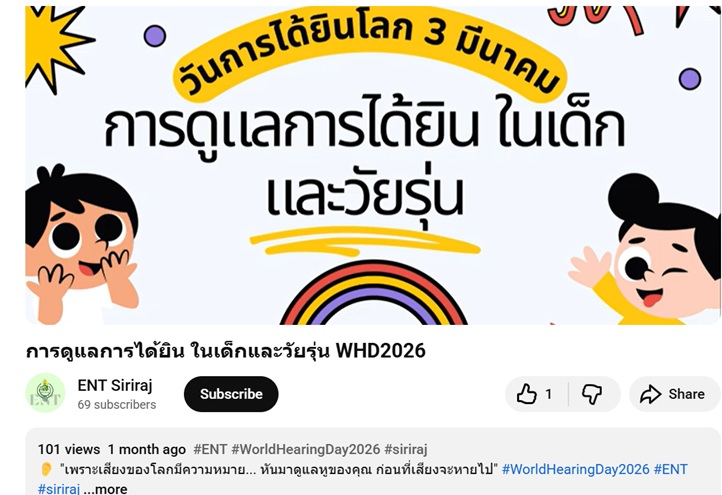
A short educational video was developed to raise public awar
Types of Engagement:
Live event: Yes
Screening: Yes
Traditional media: No
Social media: Yes
Special needs populations: children and adolescents
Met with individual policymaker: No
Participation of policy makers: No
Participation of influencers: No
WHO technical tool used: No
WHO educational and social media used: No