Organization: Hearing NZ
Title: Raising government awareness for World Hearing Day
Al title (for format and translation – not permanent:
Raising government awareness for World Hearing Day
Description:
To strengthen government and community awareness around World Hearing Day, Hearing NZ implemented a coordinated national engagement initiative designed to elevate the profile of hearing health across Parliament, schools, families, and the arts sector. Information outlining the World Hearing Day theme and its relevance to New Zealand was sent to every Member of Parliament, accompanied by a white cat lapel pin. We received letters back from the Prime minister as well as other govenrment officals recognising the importance of hearing and indicating that they wore the pin. The white cat has become a unifying emblem—simple, recognisable, and conversation-starting—intended to signal solidarity with the one in four New Zealanders affected by hearing loss and the many children experiencing listening challenges.
White cat pins were also distributed to participating schools, reinforcing the connection between national leadership and grassroots engagement. Schools were encouraged to incorporate the symbol into assemblies and classroom discussions about safe listening, inclusion, and communication. To further deepen community participation, we invited individuals, families, and community groups to knit or crochet white cats as a creative awareness activity. This intergenerational initiative provided a practical way for communities to contribute while fostering conversations about prevention, early identification, and the impact of listening fatigue on learning and wellbeing.
Central to this year’s work was the piloting of a community- and classroom-based, gamified hearing and auditory processing (APD) screening and therapy programme delivered across eight schools. All students were screened en masse using automated hearing and listening assessments, with follow-up therapy provided at the classroom level regardless of individual APD outcomes. This inclusive model reduced stigma, ensured broad access, and supported teachers in understanding how listening load affects classroom performance. The gamified format increased student engagement while allowing for measurable pre- and post-intervention comparisons. White cat pins were supplied to participating schools to unify the programme under a shared awareness banner and to visibly acknowledge each school’s leadership in supporting hearing health.
Beyond schools, we extended engagement into the cultural sector by hosting an Auracast™ hearing accessibility evening at the St James Theatre on 12 March. The event demonstrated next-generation assistive listening technology that enables direct audio streaming to hearing aids, earbuds, and smartphones in public venues. By showcasing practical, scalable solutions, the evening highlighted how theatres and performance spaces can become more inclusive without compromising artistic experience.
In April, Hearing NZ will participate as a panelist in a national webinar hosted by Arts Access to discuss the future of Auracast and hearing accessibility within the arts and community venues. This forum provides an opportunity to connect policymakers, venue operators, disability advocates, and technologists, ensuring that hearing inclusion remains part of broader accessibility planning.
Recognising that hearing health begins long before school age, we also developed an antenatal hearing health education module in collaboration with Parent Centre. The 30–45 minute module aligns with World Hearing Day objectives and focuses on prevention, early identification, safe sound practices, middle ear care, immunisation awareness, and developmental milestones. The programme is being offered through multiple Parent Centre locations, with accompanying resources—including presentation slides and facilitator scripts—made freely available on our website to support consistent delivery nationwide.
Together, these initiatives demonstrate a whole-of-community approach—from Parliament to classrooms, from theatres to antenatal education—positioning hearing health as both a public health priority and a shared social responsibility.
Primary site: WPR – New Zealand
Region: WPR
Impactful Story:
We received a letter from the Prime ministers’ office, in addition to letters from other members of Parliment, acknoledging the importance of hearing indicating that our message reached the highest levels of Government. Our members knit/crochet cats which we gave to schools and used as a fundraiser. Our Webinar on auracast for arts access had over 100 attendees and generated several dicussions on the need for hearing accessiblity. We also tested classrooms in a marganised community for hearing/apd. 75% had hearing issues. Many related to Wax/ OME. Ora Toa, the Māori health organisation will check ears in the waiting room.
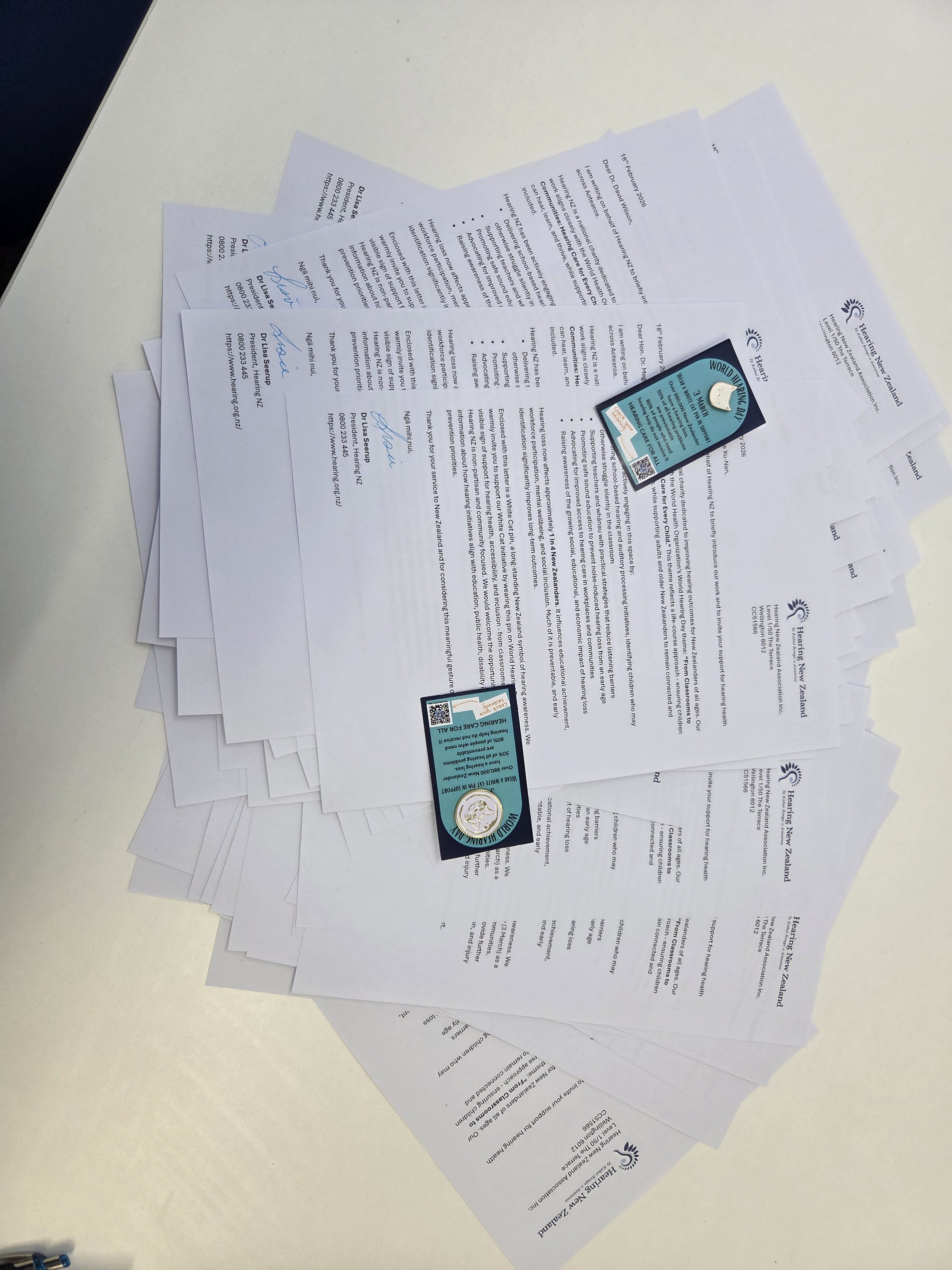
General Photos
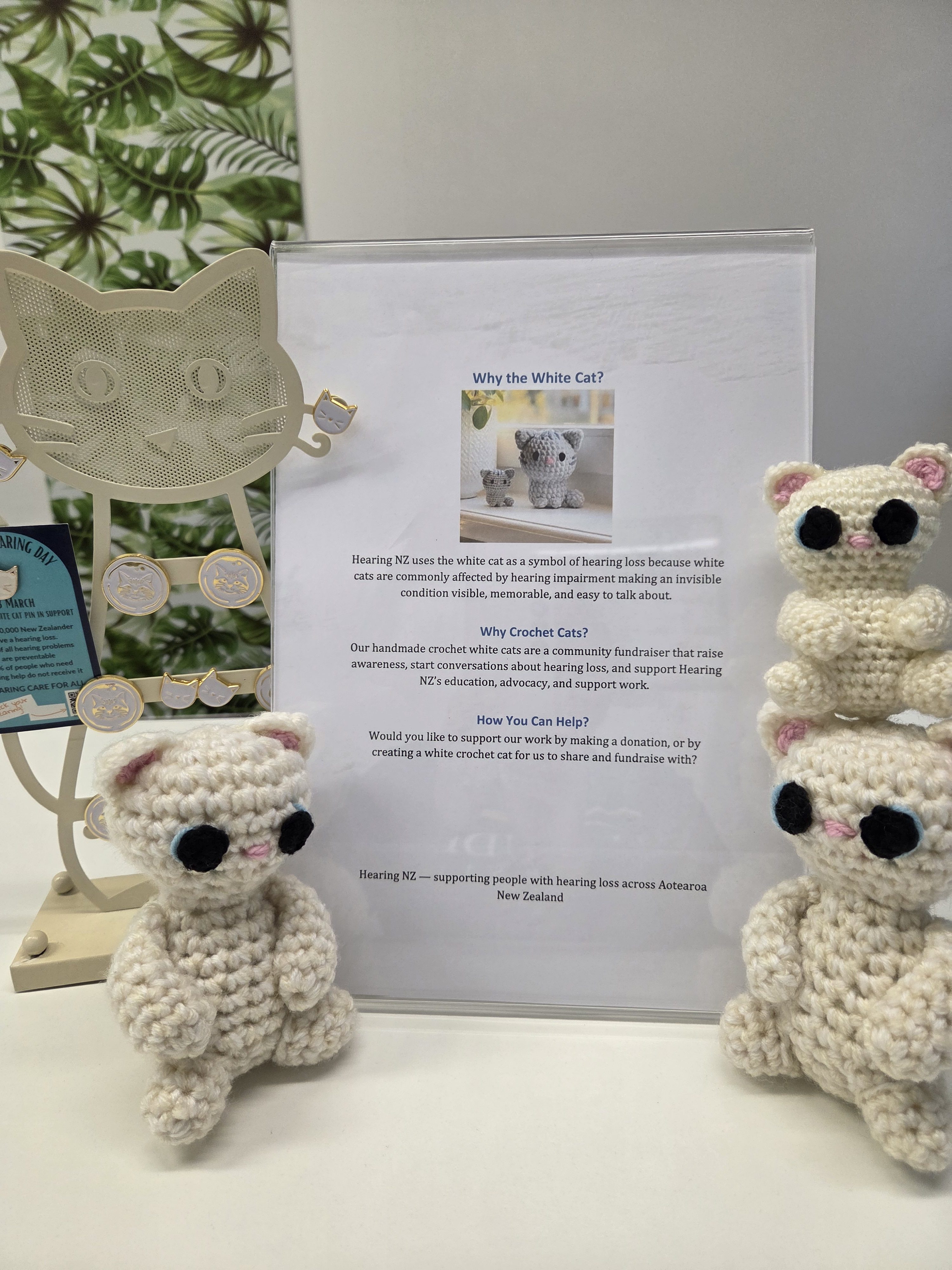
Knit white cats
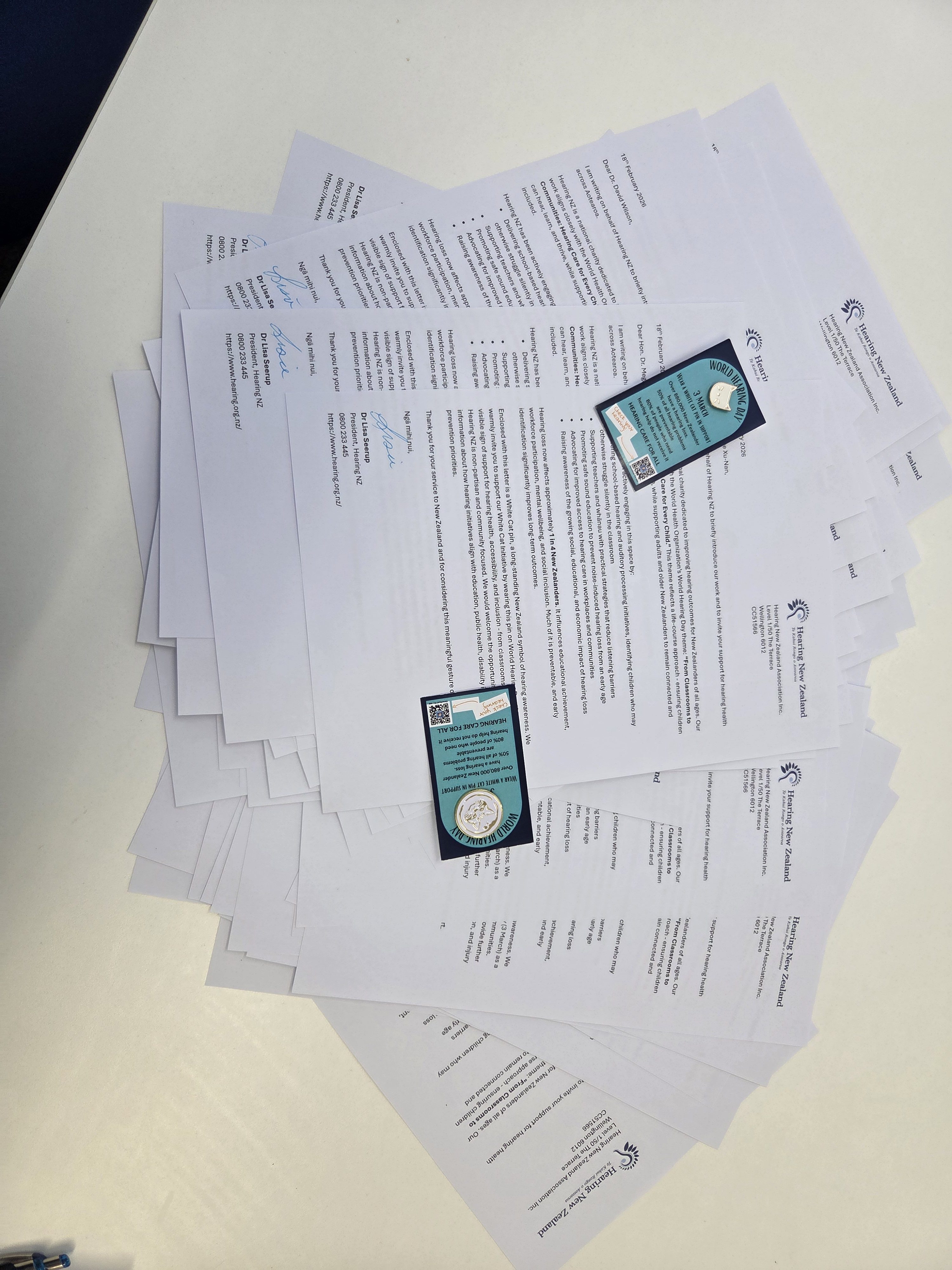
Letters and pins to Members of Parliment
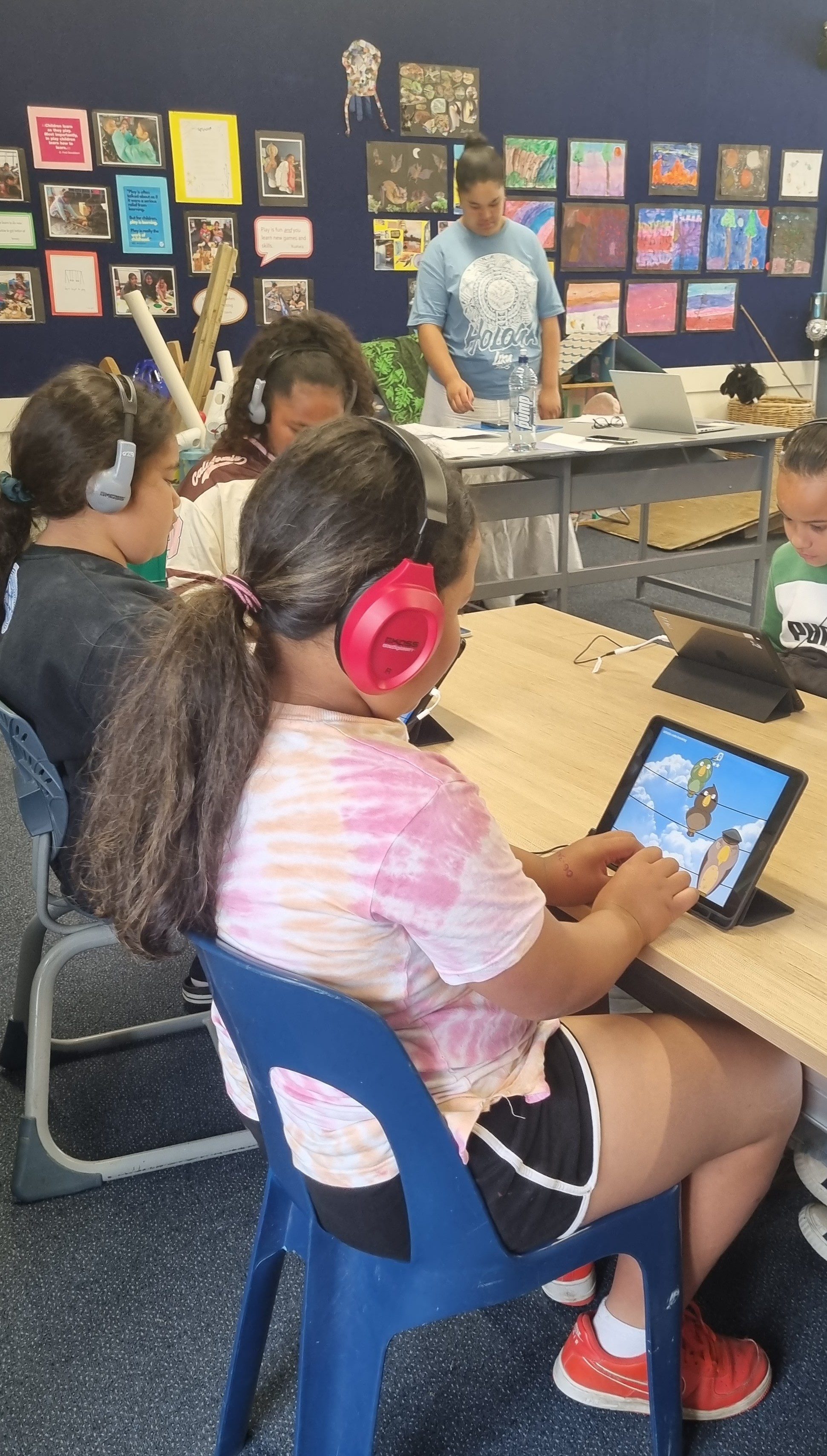
Hearing/APD testing at local school
Types of Engagement:
Live event: Yes
Screening: Yes
Traditional media: Yes
Social media: Yes
Special needs populations: children and adolescents
Met with individual policymaker: Yes
Participation of policy makers: Yes
Participation of influencers: Yes
WHO technical tool used: Yes
WHO educational and social media used: Yes