Organization: Kenyatta University Teaching Referral and Research Hospital, Nairobi, Kenya
Title: Safe Listening Awareness and Advocacy Campaign for the Prevention of Noise-Induced Hearing Loss
Al title (for format and translation – not permanent:
Safe listening awareness and advocacy campaign for the prevention of noise-induced hearing loss
Description:
To commemorate World Hearing Day 2026, Kenyatta University Teaching, Referral and Research Hospital (KUTRRH) implemented a Safe Listening Awareness and Advocacy Campaign aimed at preventing avoidable noise-induced hearing loss and promoting early hearing care. The initiative targeted policymakers, educators, health professionals, and school-going children in Nairobi, Kenya, with the goal of raising awareness on unsafe listening practices and strengthening access to early detection and intervention for hearing challenges among children.
The campaign was conducted as part of KUTRRH’s commitment to advancing ear and hearing care services and supporting global efforts to promote safe listening. Activities combined professional training, school and teacher sensitization, media engagement, digital advocacy, stakeholder mobilization, and clinical follow-up to maximize awareness, prevention, and service delivery.
Capacity building was a key component of the campaign. Continuing Medical Education (CME) sessions were held for hospital staff to enhance knowledge on hearing health, safe listening practices, early identification of hearing loss, and referral pathways for specialized care. A total of 71 staff members participated. The CME sessions incorporated evidence-based materials from the WHO mSafeListening Handbook, Primary Ear and Hearing Training Manual, and Hearing Screening Guidelines, aligning with global best practices and standards.
Community and school-based outreach formed the core of the initiative. Sensitization sessions were conducted in four public schools, targeting learners, teachers, and school administrators. A total of 1,914 students at Kahawa Comprehensive School, 1,001 students at Kiwanja Comprehensive School, 2,000 students at Mahiga Comprehensive School, and 2,500 students at Kamiti Comprehensive School were reached. In addition, 78 teachers participated in targeted sensitization sessions, increasing awareness of safe listening practices and strategies for supporting children with hearing challenges. During these sessions, WHO IEC materials were used to provide age-appropriate, evidence-based information on safe listening, noise-induced hearing loss, and strategies to protect hearing.
During the week and as part of the clinical component, 75 children were screened for hearing challenges. Those identified with potential hearing difficulties will be prioritized for follow-up interventions, including hearing aid fitting, audiological assessment, and related clinical services.
The campaign also strengthened stakeholder engagement. Policymakers and community leaders were involved to highlight the importance of early hearing interventions and to encourage supportive policies and school-based initiatives that protect children’s hearing.
To further extend the reach of the campaign, KUTRRH engaged with local media outlets. Awareness sessions were broadcast through two radio stations and one television station, where hospital specialists discussed noise-induced hearing loss, prevention strategies, early screening, and the availability of clinical services. In addition, the hospital utilized its social media platforms, sharing educational content on hearing health and safe listening practices, amplifying public awareness beyond the immediate community.
In the week of 16th March 2026, KUTRRH plans to conduct hearing aid fitting and follow-up services for eligible children identified during the outreach and screening activities. These services will include audiological assessment, ear impression taking for earmolds, hearing aid programming, and follow-up consultations to ensure effective device use and continuity of care.
The initiative was be implemented in collaboration with several partners, including the Clinton Health Access Initiative (CHAI), the BAWOP Hearing Technical Team, the Kenya Society for the Deaf Children (KSDC), the Hearing Loss Society of Kenya, Starkey Technologies, the Kenya Institute of Special Education (KISE), and the Kenya Society for the Blind. These partners provided technical expertise, clinical support, community mobilization, and specialized services for children requiring hearing or visual interventions.
Through this integrated approach, combining staff training, teacher and school engagement, media and digital outreach, stakeholder mobilization, and clinical services, the campaign has successfully promoted safe listening practices, increased awareness on preventable hearing loss, and strengthened access to early hearing detection and intervention.
Primary site: AFR – Kenya
Region: AFR
Impactful Story:
Dr. Caroline Ngugi, Director of Training, Research, and Partnerships at Kenyatta University Teaching, Referral and Research Hospital (KUTRRH), knows firsthand the challenges of hearing loss. Her early experiences were marked by late diagnosis, stigma, and the high costs of care, leaving her feeling isolated. Receiving a timely diagnosis and embracing her condition transformed her journey, turning challenges into strength and purpose. Inspired by this personal experience, Dr. Ngugi now leads initiatives to promote early hearing detection, safe listening, and equitable ear care, ensuring children and communities have access to support and opportunities she once struggled to find.
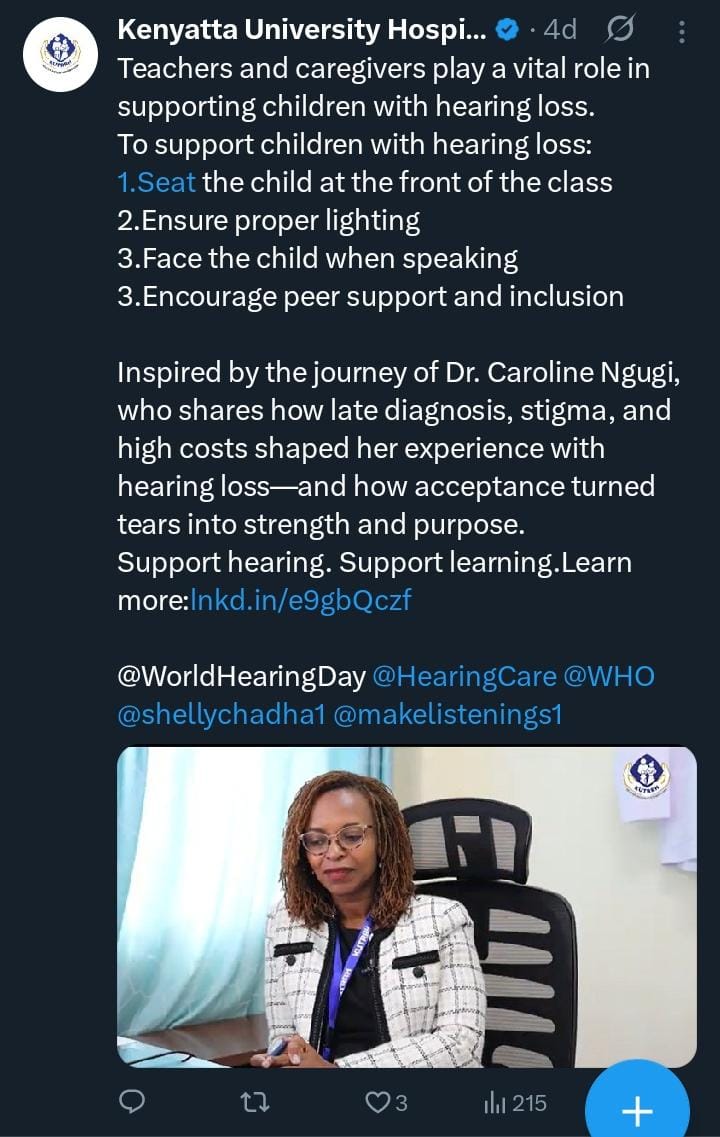
General Photos
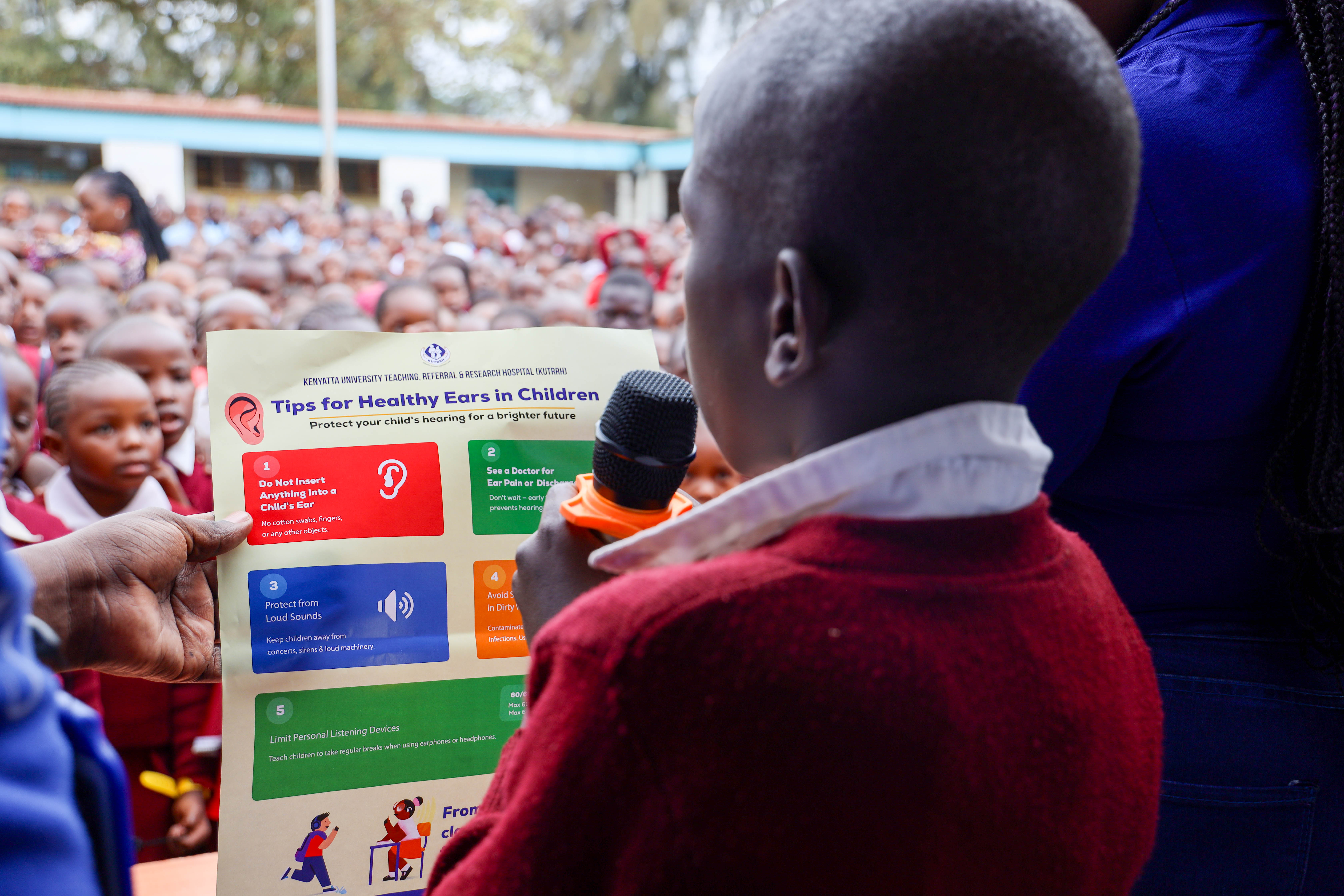
A learner sharing tips for healthy ears in children
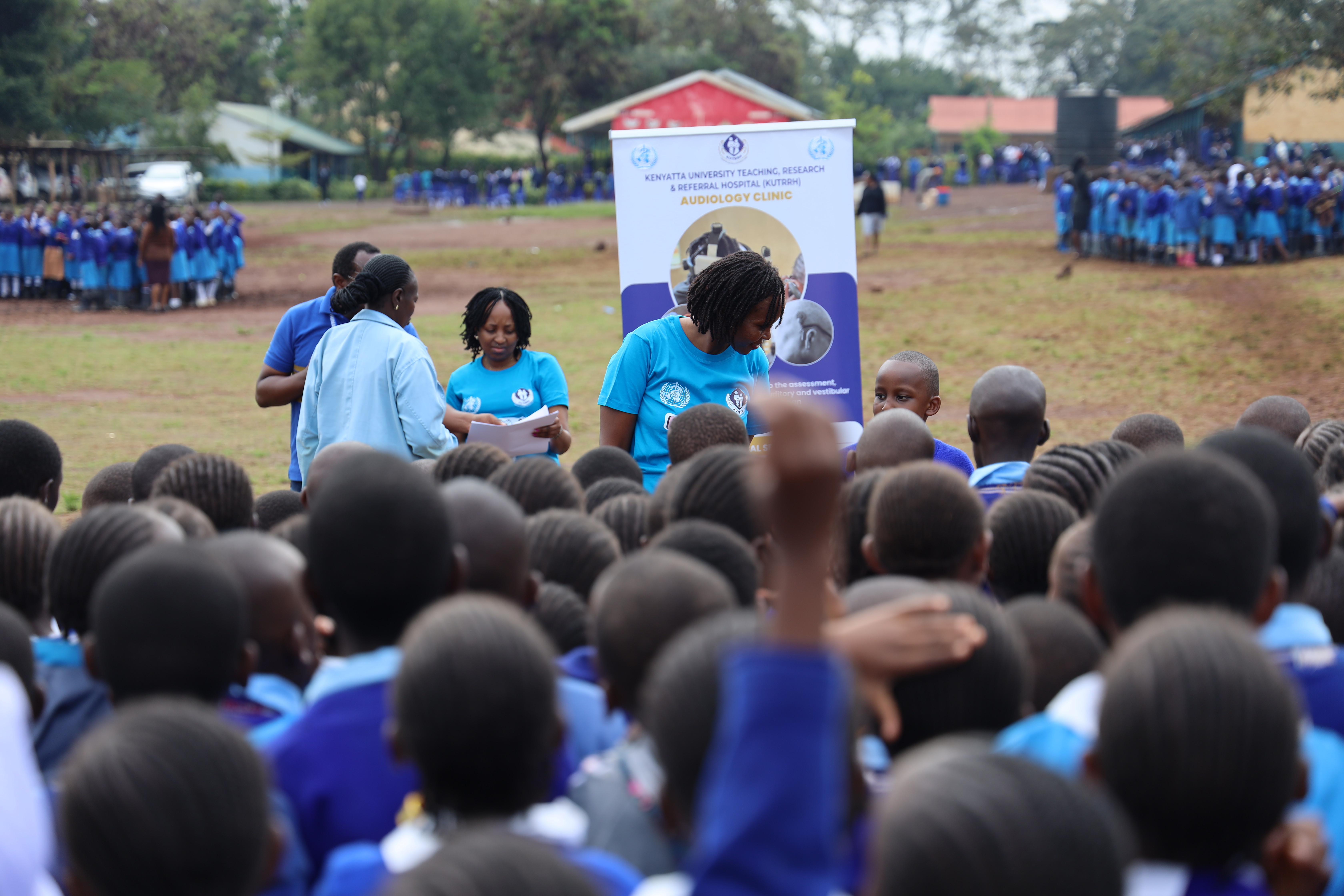
An Audiologist sensitizing learners on safe listening
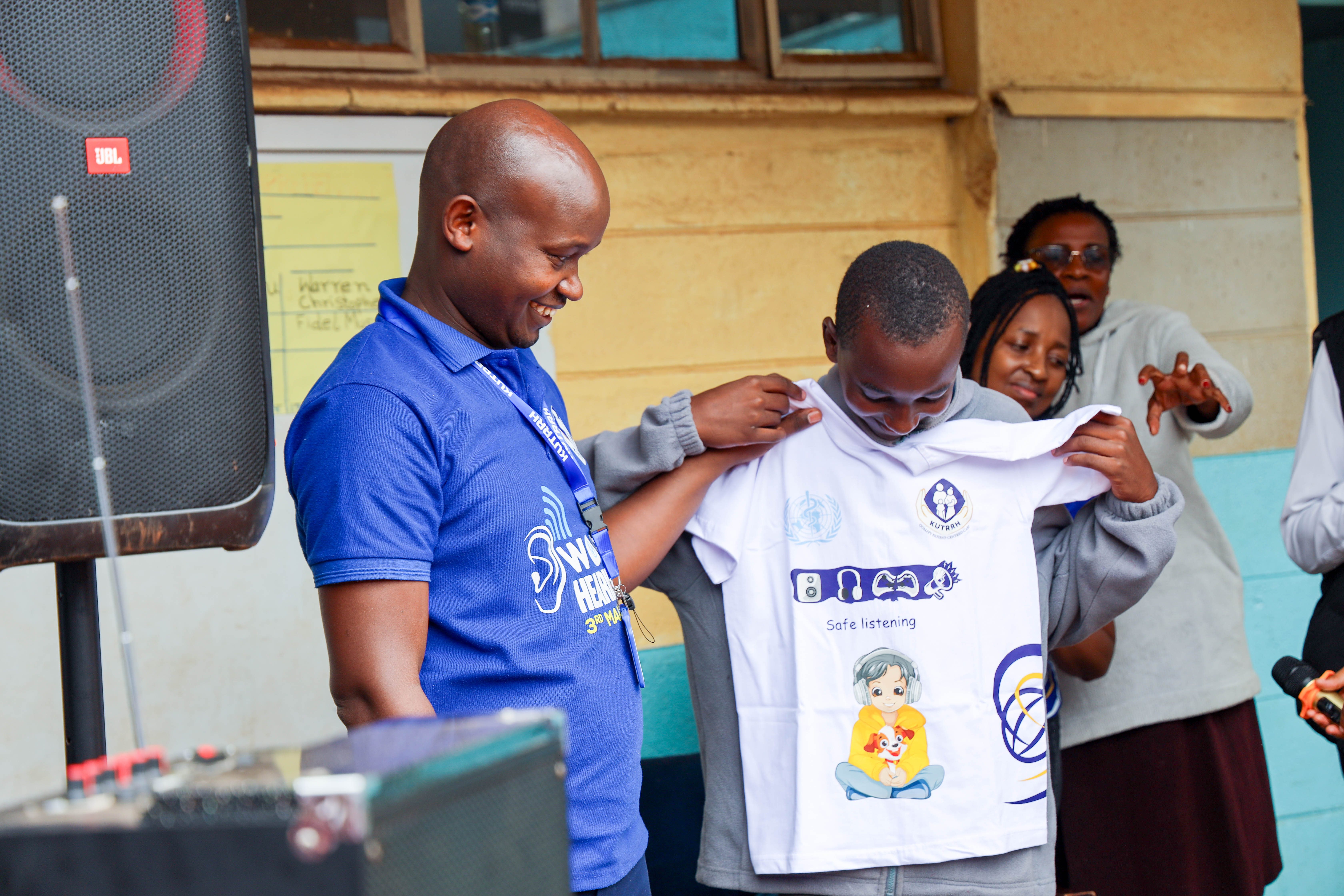
Celebrating learners’ knowledge in ear and hearing care.
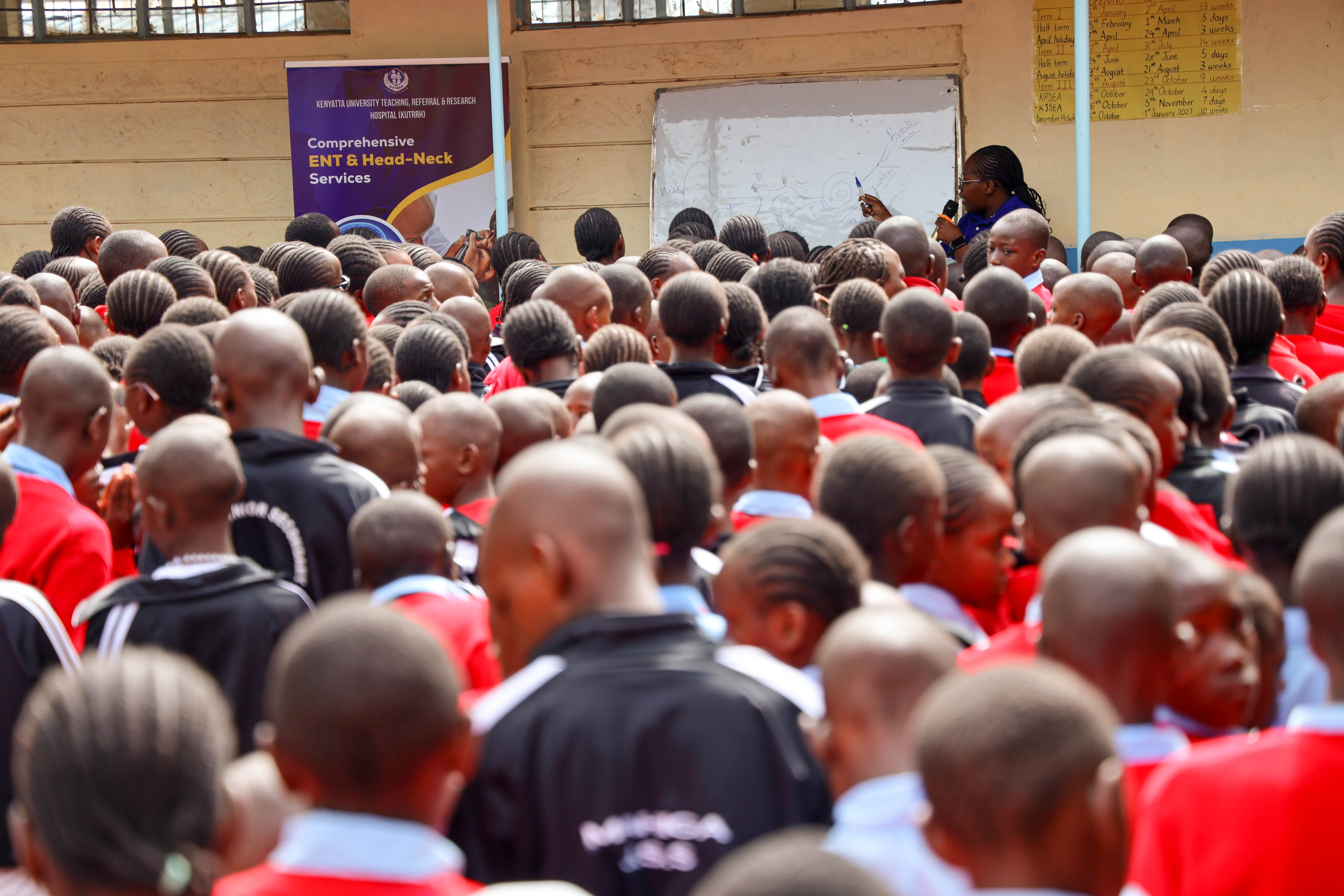
Audiologist teaches learners about the anatomy of the ear
Types of Engagement:
Live event: Yes
Screening: Yes
Traditional media: Yes
Social media: Yes
Special needs populations: persons with disabilities (including hearing loss), children and adolescents
Met with individual policymaker: Yes
Participation of policy makers: Yes
Participation of influencers: No
WHO technical tool used: Yes
WHO educational and social media used: Yes