Organization: ENT Department Aminu Kano Teaching Hospital
Title: World Hearing Day 2026: From community to classrooms, no child is left behind
Al title (for format and translation – not permanent:
World Hearing Day 2026: From community to classrooms, no child is left behind
Description:
World Hearing Day 2026: No child is left behind
Following the release of this year’s theme, the statutory committee on World Hearing Day of the ENT Department of Aminu Kano sprang into action to prepare and carry out this message to the right places. The uniqueness of this year’s theme challenged the committee to reach out to a special group of schoolchildren whose hearing care had remained unnoticed for a long time. The Tsangaya school programme was introduced in 2012 by Goodluck Ebele Jonathan to integrate the centuries-old traditional schools of Northern Nigeria to empower them with numeracy, literacy, vocational and life skills, including health hygiene. There were about 1,400 registered such schools in Kano, serving 150,000 children and adolescents.
The committee engaged the commissioner of health and the Kano state Ministry of Education on its objective to reach out to these special schools. Three were selected from Tarauni, Nassarawa and Kano Municipal Local Government Areas located within the urban city of Kano. Advocacy visits were carried out to engage the local government security officials and traditional leaders of the community to express our intentions and coordinate with local authorities to carry out the event.
We carried out a two-day event on the 3rd and 4th of March 2026, where sensitisation of the hospital community, parents, teachers, traditional leaders in the community and schoolchildren were reminded of prevention and early identification of hearing problems and ear diseases. The WHO materials for the 2026 theme were printed and distributed to the schools and members of the community to spread the information further. Local radio stations were invited to participate and broadcast the information to the larger society.
During the events, 503 children were consulted using the WHO/PBD Ear and Hearing Disorders Examination form version 8.3, 216 had screening Pure Tone Audiometry, and 224 had ear procedures including dewaxing, ear irrigation and ear dressing. Details of the data obtained would be presented at the bi-weekly hospital presentation and the upcoming ORLSON conference for publication.
The committee appreciated the contribution of all members of staff of the ENT department and the management of the hospital for providing their services and free medications to this special group of schoolchildren. Special thanks to individuals who contributed in cash and kind to make this year’s World Hearing Day event a success.
Primary site: AFR – Nigeria
Region: AFR
Impactful Story:
During the event this year, 21 children were identified with moderately severe hearing loss. One of them 12 years of age held the belief that an individual hears with only one ear. He considers the other ear as a spare organ.
General Photos
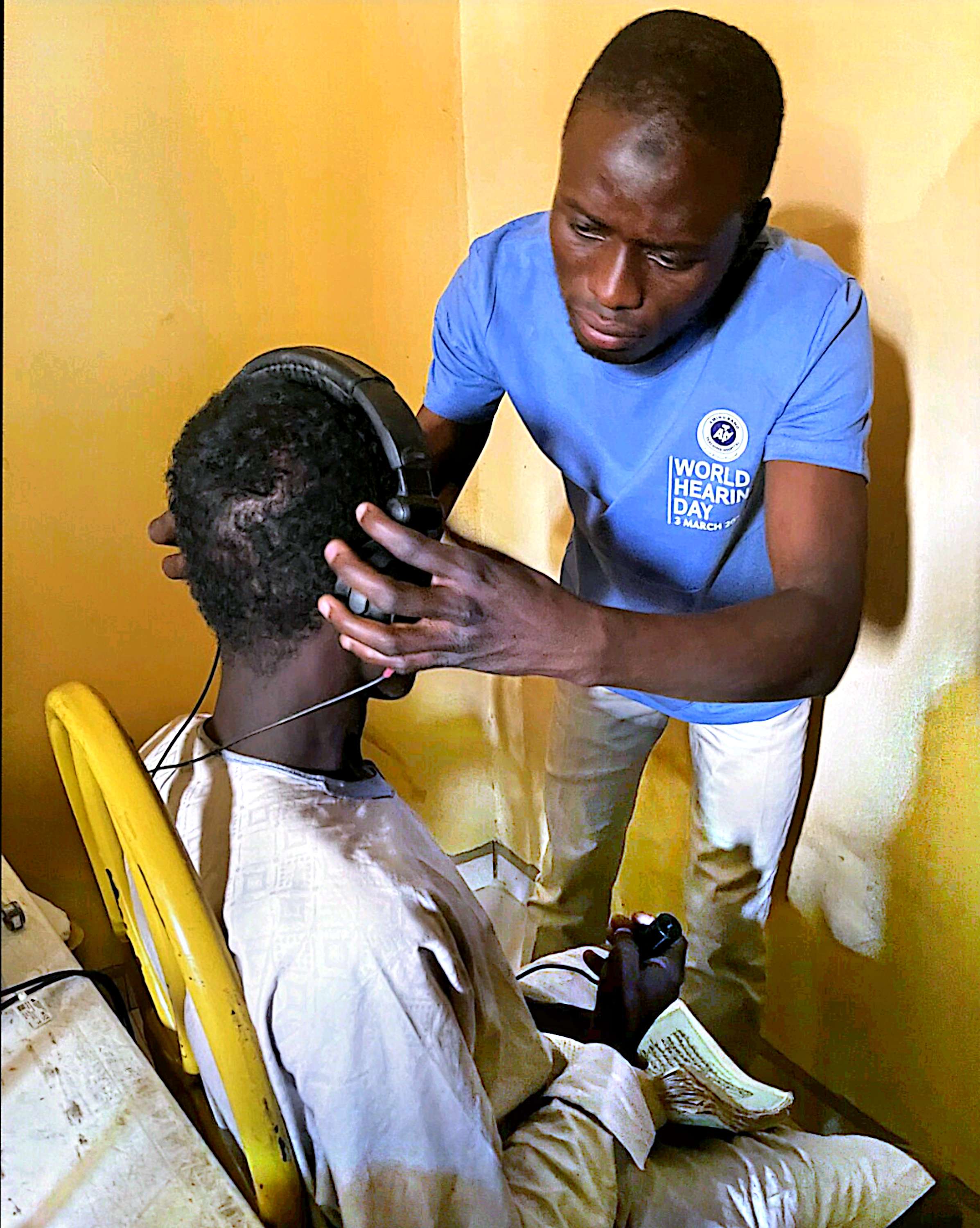
Hearing screening for a Tsangaya student on WHD 2026
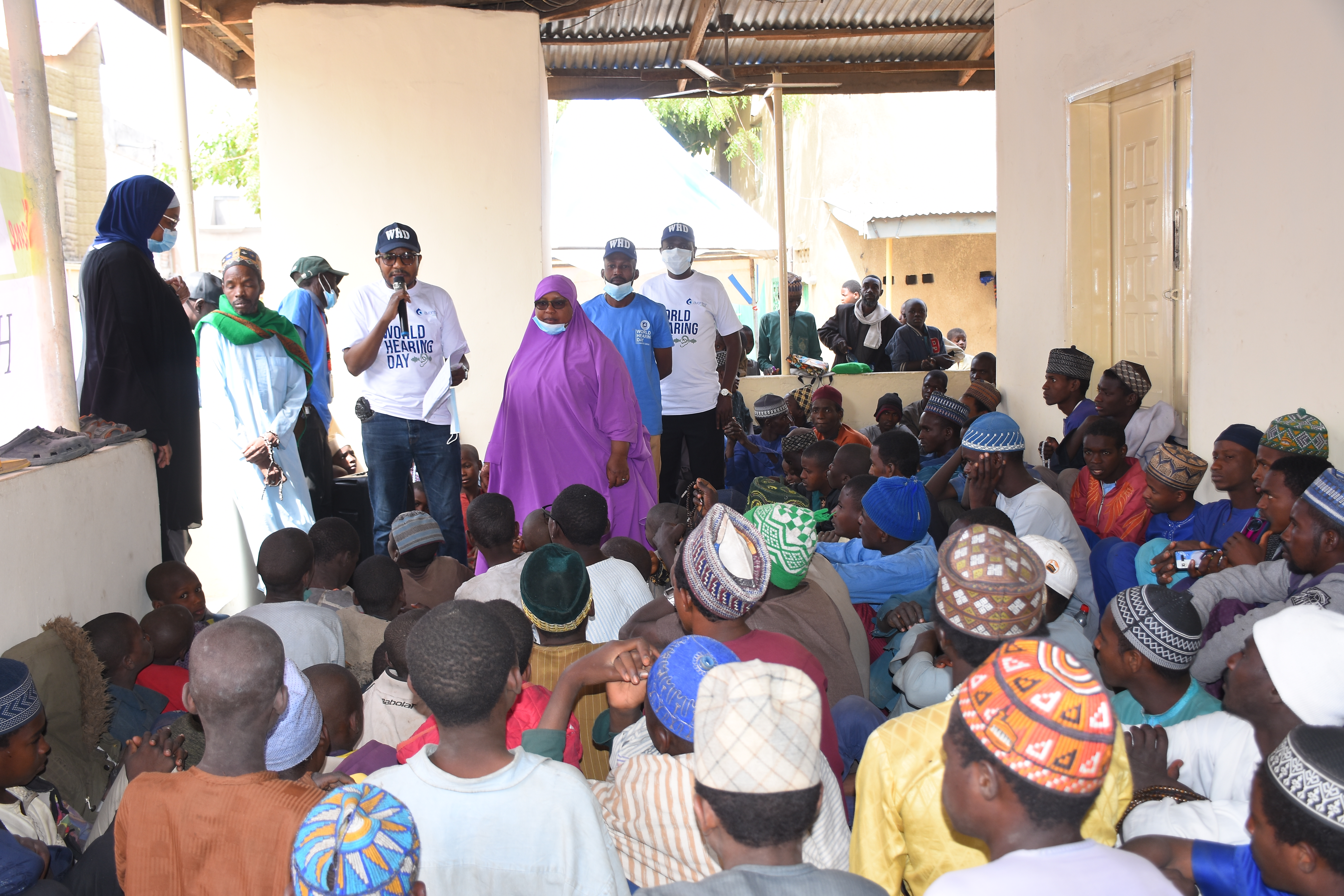
Public sensitization on hearing care
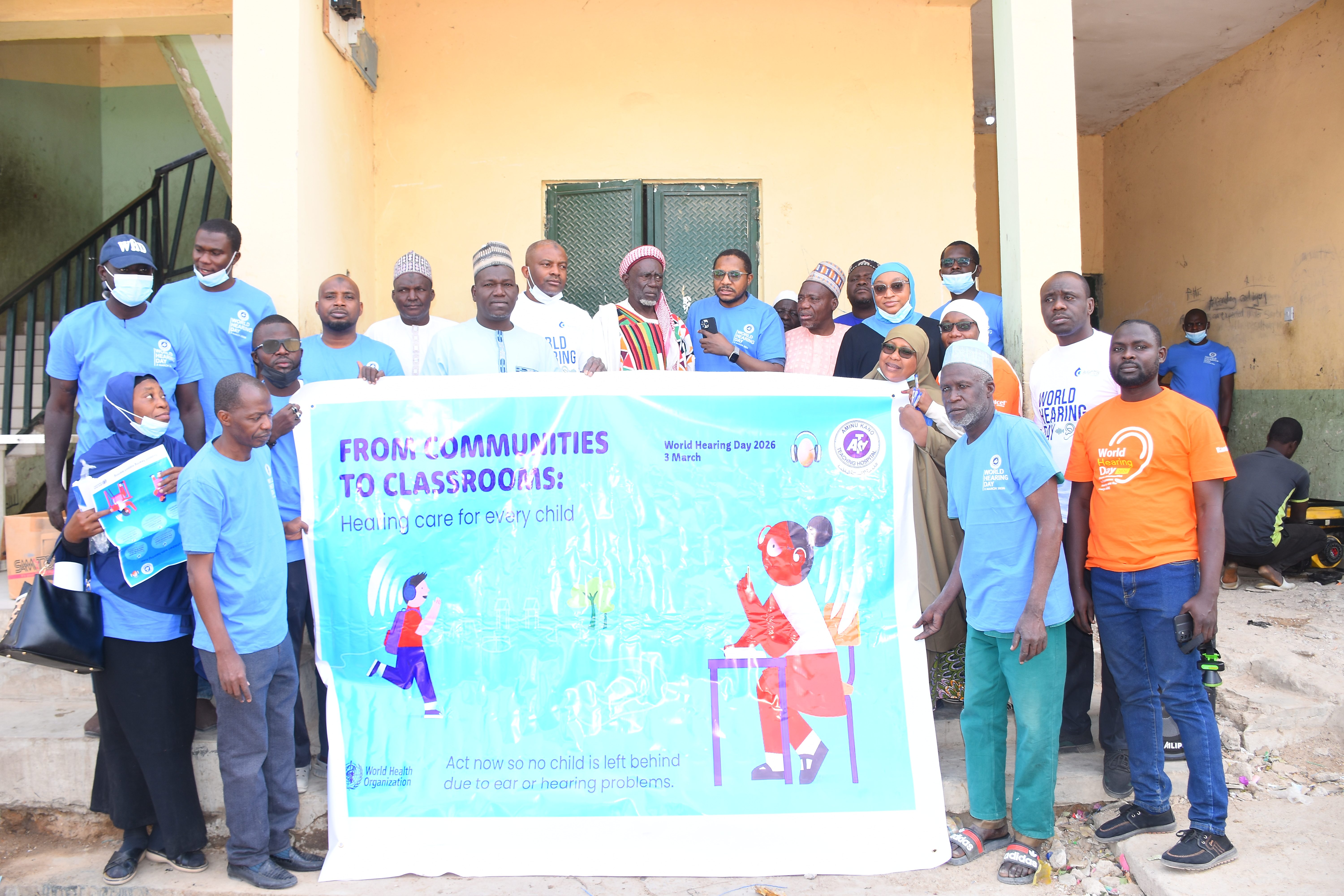
Engagement of traditional leaders, parents and teachers
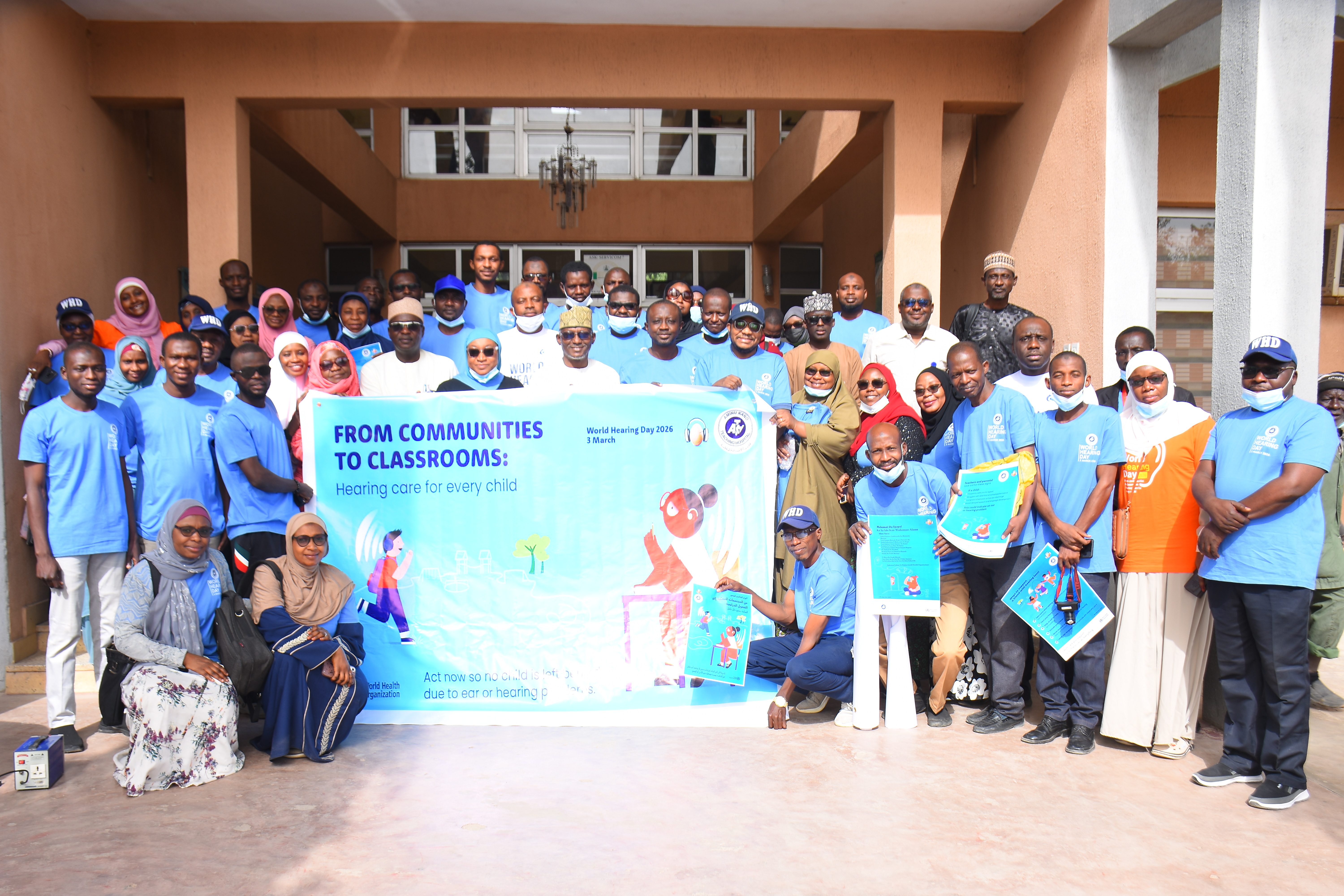
Post walk engagement of hospital staff
Types of Engagement:
Live event: Yes
Screening: Yes
Traditional media: Yes
Social media: Yes
Special needs populations: children and adolescents, Children of Tsangaya schools
Met with individual policymaker: Yes
Participation of policy makers: No
Participation of influencers: No
WHO technical tool used: Yes
WHO educational and social media used: Yes