Organization: Equitable National Alliance on Integrated Care for Sensory Impairments and Rehabilitation
Title: Launch of the Equitable Access Rise Solution/E.A.R.S. On the Move in the Pioneering Community-Based Accessibility Mission Station in the Philippines
Al title (for format and translation – not permanent:
Launch of the Equitable Access Rise Solution/E.A.R.S. on the move in the pioneering community-based accessibility mission station in the Philippines
Description:
Launch of E.A.R.S. On the Move: Bridging Global Collaboration and Local Empowerment
On May 2, 2026, the Philippines will witness the launch of the Equitable Access Rise Solution (E.A.R.S.) On the Move, which is a pioneering initiative that positions accessibility and hearing care at the heart of community development. This activity, integrated into the Diocesan Synodal Pastoral Planning, is more than a ceremonial event—it is a transformative mission that frames hearing care as both a public good and a bridge between global collaboration and local empowerment. By aligning with the World Health Organization’s initiative on hearing health through the hearing preservation task-sharing project (dedicated platform in support of Make Listening Safe and Hearing Health Wellness, the mission station becomes a Collaborating Unit, ensuring that international best practices are translated into grassroots action for an integrated localized solution that works for all.
The launch begins with the introduction of E.A.R.S. on the Move as a vehicle for public good. This introduction is not merely symbolic; it anchors the program within the pastoral consultations happening at the sectoral and house‑to‑house level. By embedding the initiative into community‑based rehabilitation programs, the mission station connects households, barangays, and diocesan structures into a unified network of support. This framing ensures that hearing care is not isolated as a medical concern but integrated into the broader social fabric of empowerment and inclusion.
A central pillar of the activity is the institutionalization of the Ear and Hearing Care Program through its Referral System Network/Clustered Referral Program. At the barangay level, quarterly meetings will be convened to sustain dialogue, monitor progress, and strengthen accountability.
Equally important is the emphasis on bridging inclusive communication through art and creativity. Children at risk of hearing loss, those with hearing disabilities, and cochlear implant users will be integrated into creative workshops alongside peers with healthy hearing. This inclusive approach not only fosters empathy but also celebrates diversity through artistic expression. By mainstreaming inclusive communication at the parochial and local level, the initiative ensures that hearing care becomes part of the local agenda, embedded in cultural practices and community identity.
The program also prioritizes feedback mechanisms to support policymakers. By generating strong, evidence‑based inputs from the ground, the initiative empowers decision‑makers at municipal, provincial, and national levels to craft responsive policies. This ground‑up approach culminates in the submission of consolidated stakeholder recommendations, which will serve as the basis for drafting the Implementing Rules and Regulations (IRR). These recommendations will be formally adopted by the Sangguniang Bayan, ensuring legitimacy and institutional backing.
Beyond policy, the launch integrates practical activities such as the Hearing and Speech Assessment Camp, which provides immediate services to those affected by hearing loss. It also encourages communities to download the hearWHO app, spreading awareness and enabling individuals to monitor their hearing health. The initiative further strengthens visibility by conducting the Referral System Network cluster meeting, ensuring that those affected by hearing loss are recognized and supported.
Collaboration with academic institutions is another highlight. By coordinating with resource speakers and experts, the program enhances interoperability within the healthcare system, preparing for the pilot mission drive in June 2026 and beyond. This academic partnership ensures that the initiative is grounded in research, innovation, and evidence‑based practice.
Ultimately, the launch of E.A.R.S. on the Move is about shaping the National Policy Framework on Ear and Hearing Care. By positioning hearing care within the national health strategy, the program ensures that accessibility and inclusion are recognized as fundamental rights. This holistic, integrated effort—from house‑to‑house consultations to national policy drafting—squarely addresses public health concerns and translates them into sustainable frameworks for action.
Primary site: WPR – Philippines
Region: WPR
Secondary sites:Philippines
General Photos

“Youth at the Heart of Safe Listening Action”
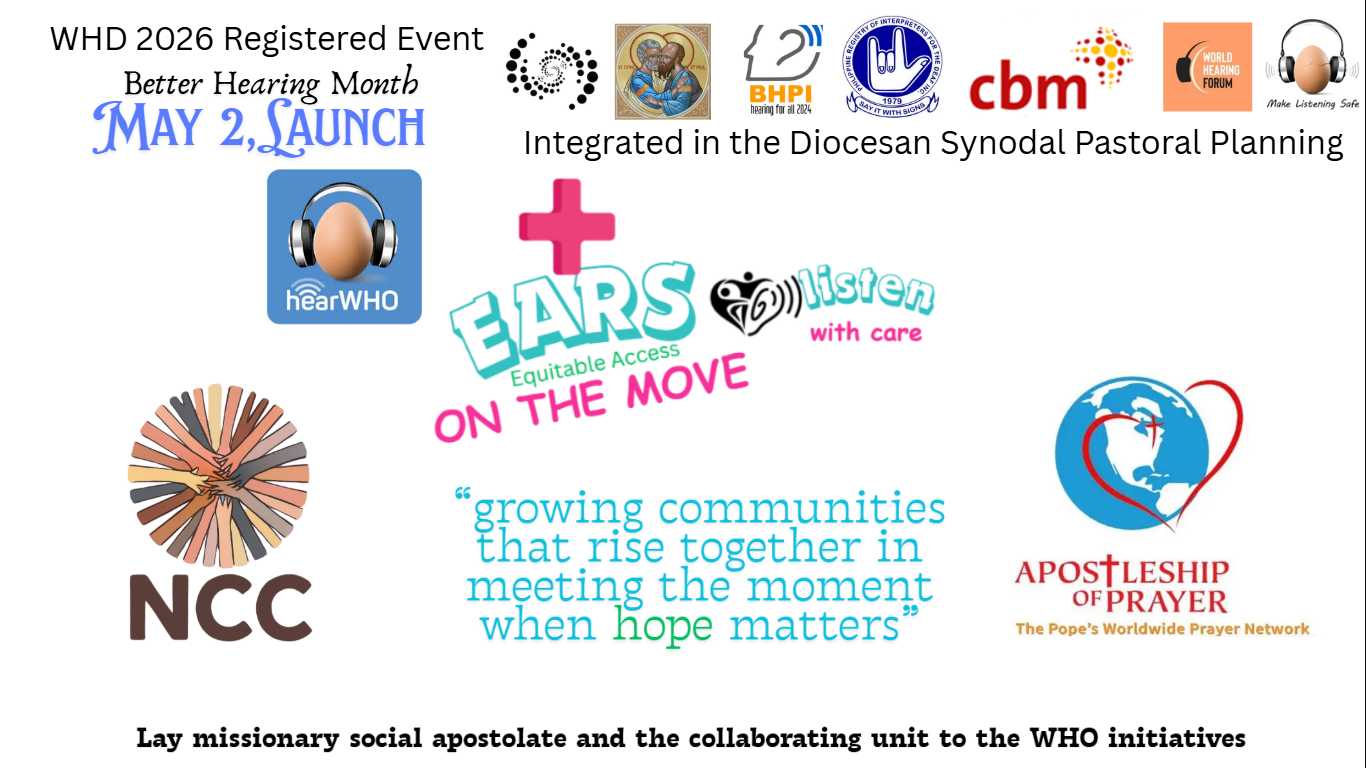
Launch of E.A.R.S. On the Move
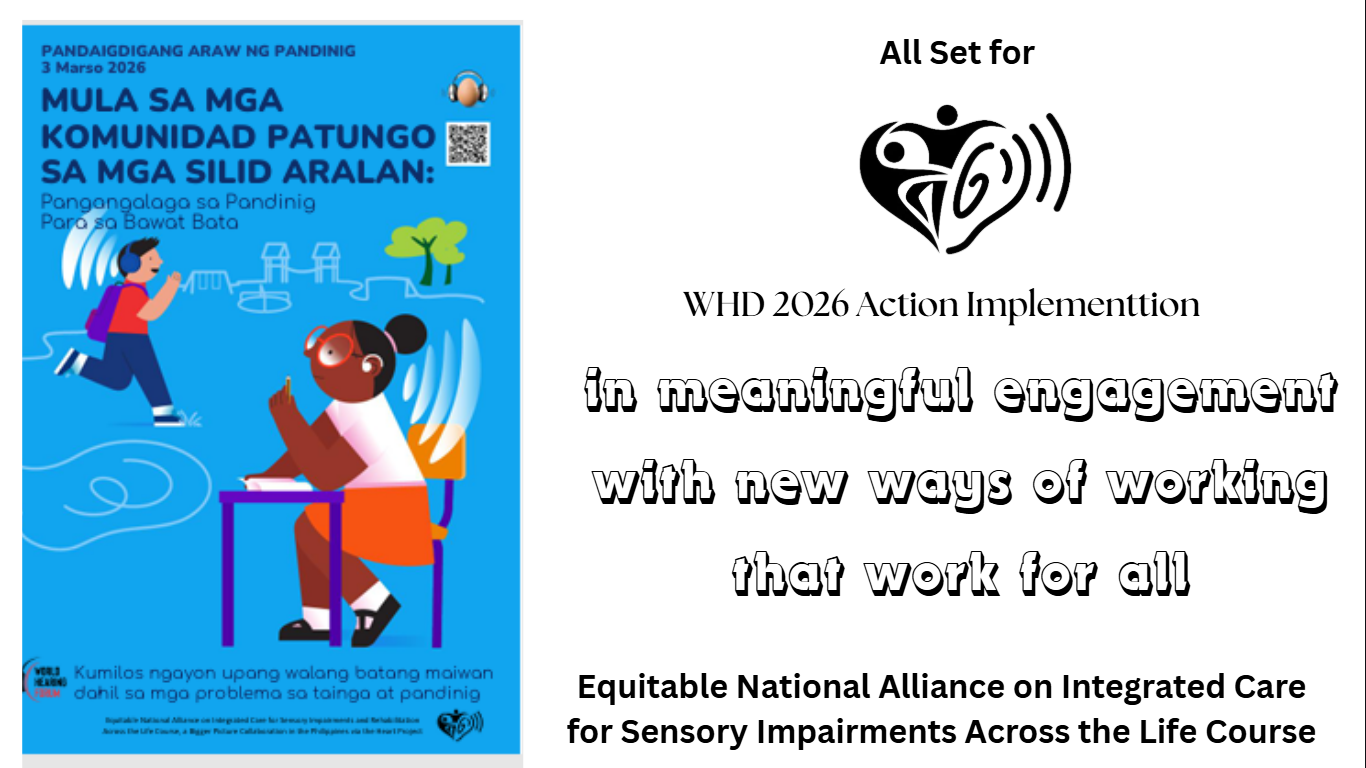
Building support system for accessible hearing care
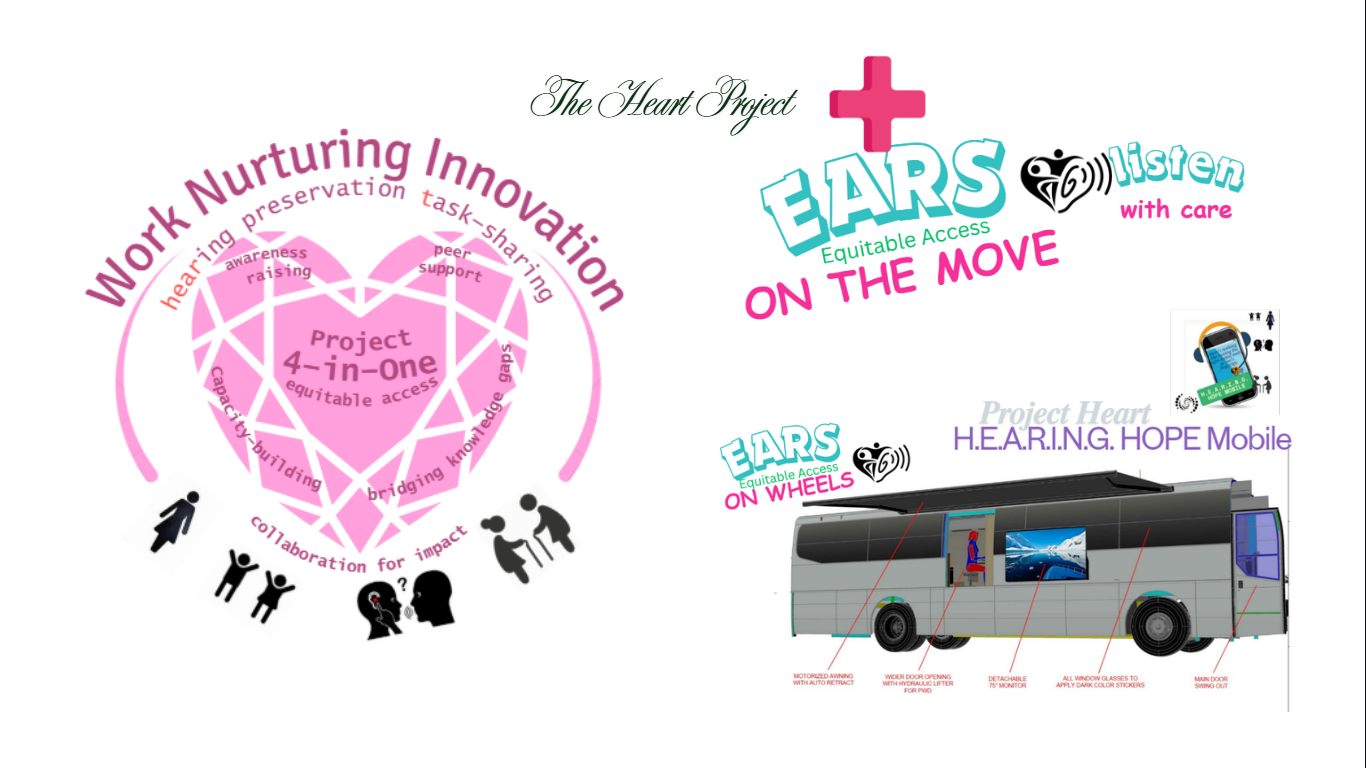
The Heart Project
Types of Engagement:
Live event: Yes
Screening: No
Traditional media: No
Social media: Yes
Special needs populations: persons with disabilities (including hearing loss), children and adolescents, older adults, rural or remote population
Met with individual policymaker: Yes
Participation of policy makers: Yes
Participation of influencers: No
WHO technical tool used: Yes
WHO educational and social media used: Yes